

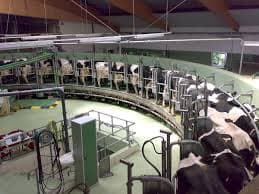
The Dutch agri-business sector can make a significant contribution to the further development of the dairy chain in Iran. The challenges in areas such as milk quality, animal feed, water usage, and training are substantial. These are precisely the fields in which the Netherlands excels.
That is what Jelle Zijlstra, dairy farming economist at Wageningen Livestock Research, says. Together with Alfons Beldman from Wageningen Economic Research, Zijlstra conducted exploratory research into developments in the Iranian dairy sector at the request of the Ministry of Economic Affairs.
The Dutch researchers conclude that the Iranian dairy sector can produce dairy products of higher quality in a more sustainable manner, according to the agricultural section of the Dutch embassy in Tehran. Any collaboration can also have a positive economic effect for Dutch companies in the dairy chain. The WUR research into the Iranian dairy market was also extensively reported this week by the English-language The Cattlesite.
Promotion
Dairy production in Iran has risen to nearly 9 billion kilograms per year. Currently, production and quality are insufficient to enable exports. Dutch technology and knowledge can contribute to better cooperation across all links in the dairy chain, it is stated.
Water is scarce in Iran, so the government places great importance on more efficient water usage. The Netherlands has extensive international experience with water-efficient cultivation of crops, both at farm level and in water management at regional and national levels. Proper training of employees is also cited by Iranian dairy farmers as an opportunity for collaboration with Dutch partners.
The research further reveals that a large portion of milk production in Iran comes from professional dairy farms with more than 150 cows. Some of these farms fall under holding companies owned by the state. There appears to be no policy for small private farms. Also, there is hardly any reliable data available about the sector.