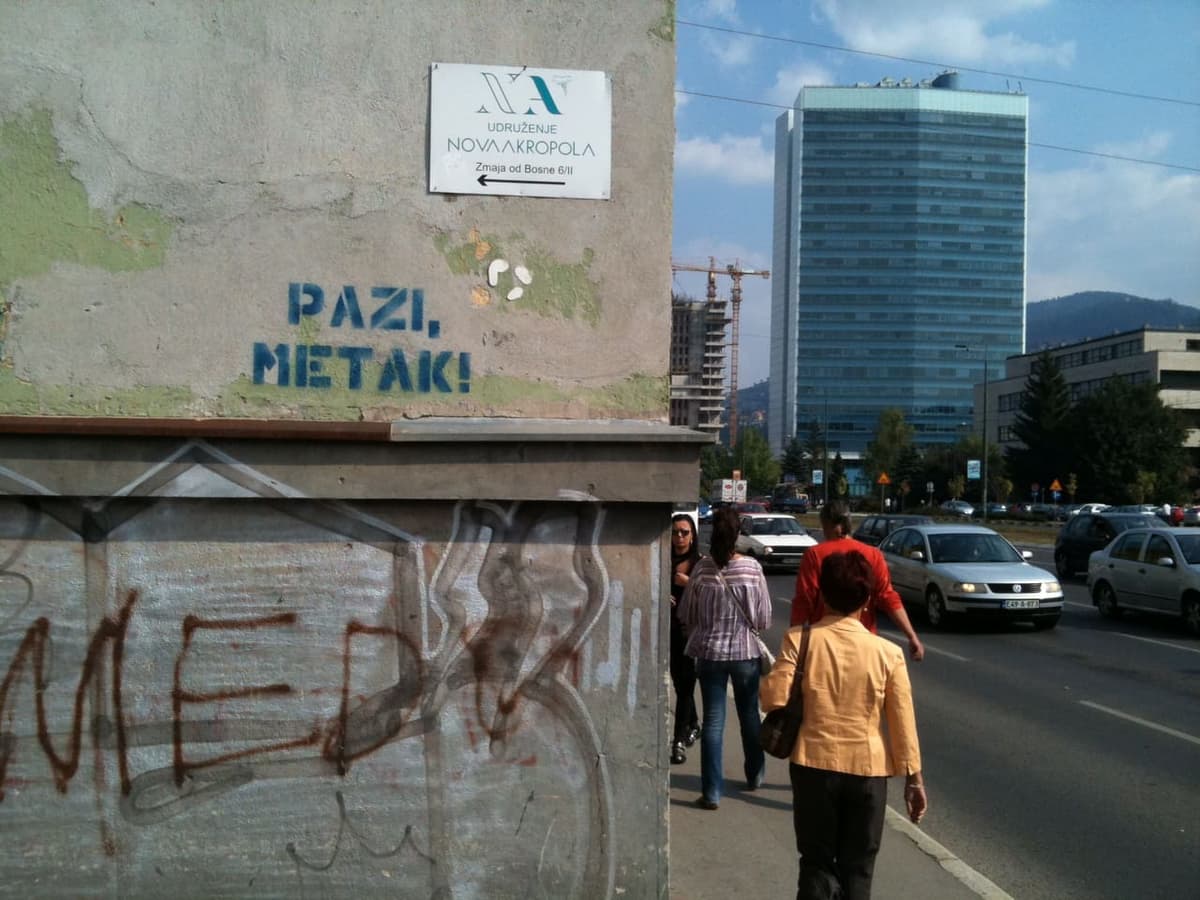
Today, thirty years ago, on April 5, 1992, the siege of Sarajevo began. The siege of the Bosnian capital would ultimately last nearly four years, resulting in over 12,000 civilian casualties. The battle for the city formed a bloody part of the Yugoslav civil war that had started a year earlier.
As a result of the disintegration of Yugoslavia, the Bosnian government held a referendum on independence on February 29, 1992. The Bosnian Croats and the predominantly Muslim Bosniaks voted in favor of separation and achieved a majority. However, the Bosnian Serbs decided to boycott the referendum and founded their own republic, Republika Srpska, supported by the Yugoslav People's Army and Serbia under Slobodan Milosevic.
A few days after the referendum was approved, Milosevic's and Mladic’s troops surrounded the Bosnian capital and the nearly four-year-long siege began. This included mortar shelling on civilian targets and snipers who randomly shot city residents.
Already in the year prior to the referendum, unrest broke out between the Bosnian Croats and Bosniaks on one side and the Bosnian Serbs on the other. In October 1991, the future president Radovan Karadžić declared, “In a few days Sarajevo will no longer exist and there will be 500,000 deaths.”
In the villages and towns seized by the Serbs, large-scale ethnic cleansing took place. All houses of non-Serbs were burned to the ground, after which the inhabitants were killed or imprisoned in concentration camps. Due to a limited mandate and a lack of willingness from the international community to approve armed intervention, UN peacekeeping units were largely powerless.
Only after the fall of Srebrenica on July 11, 1995, did this change. On August 30, NATO began air strikes on Serbian troops, and less than two months later the conflict ended and the Dayton peace negotiations began.
Estimates of the number of victims of the Bosnian war generally range between 100,000 and 110,000 deaths. In addition, another 2.2 million people fled due to the fighting, making the Bosnian War — up to that moment — the most devastating European conflict since World War II. (Currently, there are already 5 million Ukrainians displaced!)
During the siege of Sarajevo alone, 8,000 soldiers and more than 12,000 civilians died. In total, the siege lasted 3 years and 9 months, three times longer than the siege of Stalingrad. This makes it the longest siege of a capital in modern history.