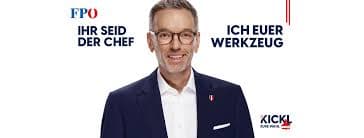
The talks between the ÖVP and FPÖ began promisingly two months ago, after an attempt to form a coalition between the two ‘traditional’ major parties (Christian Democrats and Social Democrats) had failed. Subsequently, President Van der Bellen appointed the parliamentary election winner, the far-right FPÖ leader Kickl, as formateur.
Together with the second-largest party, the ÖVP, they submitted a joint budget proposal to the European Commission. However, as the negotiations progressed, increasing disagreements arose, particularly over EU agricultural policy and on curbing immigration and closing borders. Ultimately, this led to FPÖ leader Herbert Kickl withdrawing from the negotiations.
In response to the failure of the talks, Federal President Alexander Van der Bellen outlined four possible scenarios for the formation of a future government. These include forming a minority government, installing a caretaker or expert government, restarting negotiations among other parties, or calling new elections.
A minority government would mean a party governs without an absolute majority. However, this scenario is unusual in Austria and carries risks of political instability.
Another option is appointing a caretaker or expert government. In this case, a cabinet of specialists without direct political affiliation would temporarily govern the country until a stable political solution is found. This happened before in 2019 after the Ibiza corruption scandal (which led to Chancellor Kurz's resignation), after which Brigitte Bierlein led such a government as chancellor.
Additionally, it is possible to revive the previously stalled negotiations between the Social Democrats (SPÖ), Christian Democrats (ÖVP) with the liberal NEOS or with the Greens. Although earlier talks between these parties yielded no results, a renewed attempt at forming a coalition could lead to a stable government.
Finally, new elections can be called. Given the legal timelines, these elections could take place no earlier than late May or early June. The FPÖ says it faces new elections with confidence. The party still shows gains in polls, posing a formidable challenge to the ‘traditional’ parties.
The current political deadlock has drawn criticism from various quarters. For example, the Austrian Farmers’ Association accuses the FPÖ of lust for power and irresponsible behavior during the negotiations, which contributed to the talks' failure.