

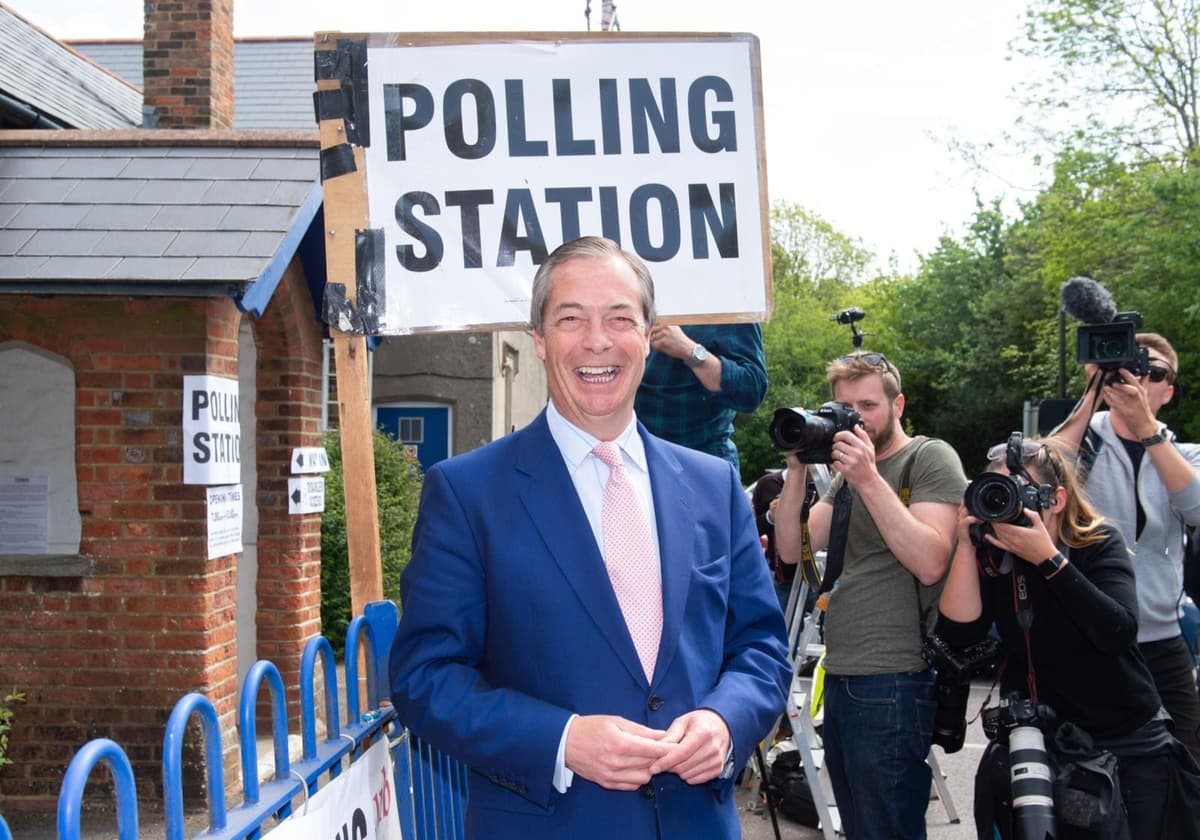
The anti-European British politician Nigel Farage has decided that his Brexit Party will not run candidates in parliamentary elections in constituencies where the Conservative Party is strong. He will only field candidates in constituencies with many dissatisfied Labour voters. In this way, Farage wants to prevent parliamentary seats from going to the pro-European opposition, since the anti-European Brexit Party and the Conservatives would otherwise compete against each other.
Farage is particularly targeting the largest opposition parties, Labour and the Liberal Democrats (Lib Dems). The latter party has spoken out against Brexit, while Labour leader Jeremy Corbyn wants to let the British people vote on the issue again with a second referendum.
Because of Farage’s decision, the Brexit Party will have no chance of winning 317 of the total 650 seats in the UK parliament. This represents a significant turnaround compared to just a week ago, when at the launch of the election campaign he said the Brexit Party had hundreds of candidates ready. Due to the Brexit Party’s decision, Johnson’s Conservatives become the only party with a candidate in many constituencies who support leaving the EU.
Promotion
Farage has also said that he tried for months to set up an alliance between the Conservatives and his Brexit Party. However, such cooperation was firmly rejected by Prime Minister Johnson, who expected it would weaken his party. Farage is not only a fiercely anti-European politician in British politics but is also still considered by many Britons as the founder of the UKIP party, which has drifted into extreme right-wing territory in recent years.
For now, the Brexit Party wants to focus entirely on constituencies held by Labour. According to Farage, the largest opposition party has broken its promise to voters because Corbyn no longer respects the result of the first Brexit referendum in 2016.
A Labour election victory seems increasingly out of reach due to Farage’s decision. In the polls, Corbyn’s party made a good impression last week and was slowly closing the gap on the Tories, but Labour still trails the Conservatives by 12 percentage points. Opinion polls in Great Britain show wide variations in their forecasts, largely due to the constituency-based electoral system.
The first televised debate between Johnson and Corbyn takes place tonight/Tuesday. Labour aims to focus the debate on issues other than just whether or not to leave the EU. Johnson, on the other hand, continuously undermines Corbyn with his wavering stance on the UK’s withdrawal from the EU.