

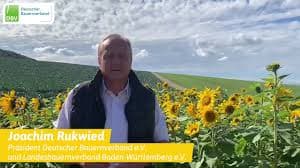
A year ago, dissatisfaction over the abolition of cheap diesel for agricultural tractors led to large demonstrations across Germany. Although these protests yielded some results, Rukwied stressed that sustainable change requires targeted cooperation with politicians. "Now is not the time to take to the streets again," said Rukwied. According to him, the focus must now be on influencing election campaigns and steering agricultural policy through dialogue and participation.
Rukwied's call comes at a crucial moment, as the German center-left three-party coalition has now fallen due to internal divisions over the economic course. At the same time, agricultural policy remains a contentious issue.
The ZKL Future Commission of external experts recently again advocated a thorough modernization of the agriculture and livestock sector. The commission urges politicians to quickly decide on funding these plans. The DBV has broadly supported this vision for the future but warns that its implementation heavily depends on sufficient financial resources and a stable agricultural budget at the European level.
Promotion
Rukwied also outlined some key points that, according to the DBV, should be prioritized in the current German election campaign. For instance, he calls for a tax on agricultural diesel set at a level comparable to the European average.
Additionally, he draws attention to reducing bureaucratic burdens, which he considers unacceptably high. He also highlights the necessity of measures against climate change, which increasingly affects the agricultural sector, and the importance of food security as a foundation for social stability.
The farmers' chairman advocates reforming the Common Agricultural Policy (CAP), with a gradual phase-out of direct payments within five to seven years, provided conditions are relaxed. This should be accompanied by a stronger focus on environmental protection and support for young farmers.
With the federal elections approaching, the German agricultural sector seems at a crossroads. Farmers are challenged to make their voices heard, not on the streets, but in the political arena. Although previous protests, according to Rukwied, have contributed to public and political awareness, he now sees more opportunities in dialogue. "Go to the politicians and participate," was his call to German farmers.