

The Flemish government coalition has agreed on a stricter climate policy whereby agriculture must produce fewer greenhouse gases, but the livestock population does not need to be reduced. Flanders will accelerate the transition to electric driving and home insulation.
Earlier, Flanders had set a target to reduce CO2 emissions by 35 percent within ten years. This target has now been raised to a 40 percent reduction compared to 2005.
The regional government in Antwerp wants the agricultural sector to reduce its CO2 emissions by at least 25%, and a reduction target of -30% is set for methane. This is a significant tightening compared to the current situation.
Promotion
The bar will also be raised by 10 percent for the Flemish industry. No more economic subsidies will be given to companies without a climate plan. The government is mainly focusing on future innovation and new technology.
To achieve the goals of the Paris Agreement, the Flemish government has developed around 40 measures. Environment Minister Hilde Crevits (CD&V) will convey this message this weekend at the Climate Conference in Glasgow.
For example, by 2029 (in seven years!), the sale of new passenger or delivery vehicles running on petrol or diesel will be ‘phased out.’ In traffic-congested Flanders, this is a huge step forward for emissions and public health, but there will be no road pricing.
This accelerated transition to ‘electric driving’ is linked to three conditions: sufficient supply, an affordable price, and enough charging stations. If these conditions are not met, the deadline will be postponed. There will be no ban on the sale of second-hand combustion engine cars thereafter.
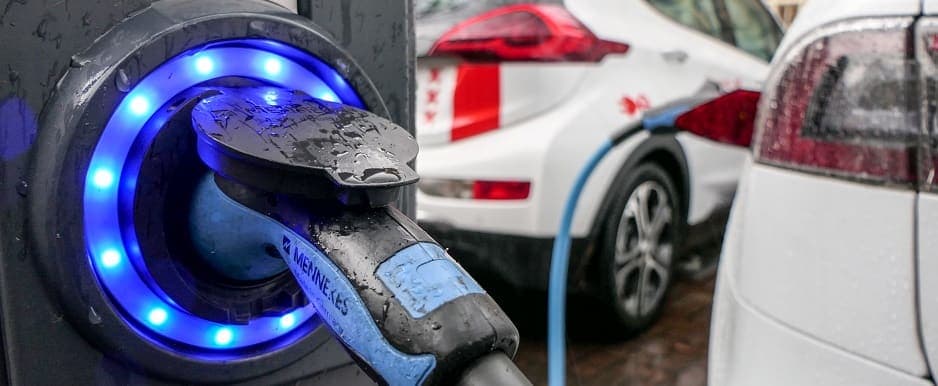
The Flemish government is aiming for 1 million electric cars by 2030, and for 100,000 charging points that can be used publicly and on private premises accessible to everyone.
From 2023 onwards, there will be a mandatory renovation obligation for those who buy energy-consuming homes. From 2023, newly built homes will be required to heat using hybrid heat pumps. And from 2026, no natural gas connection will be possible for new buildings. According to the Flemish government, this path is chosen to ensure all homes will be energy-efficient by 2040.