

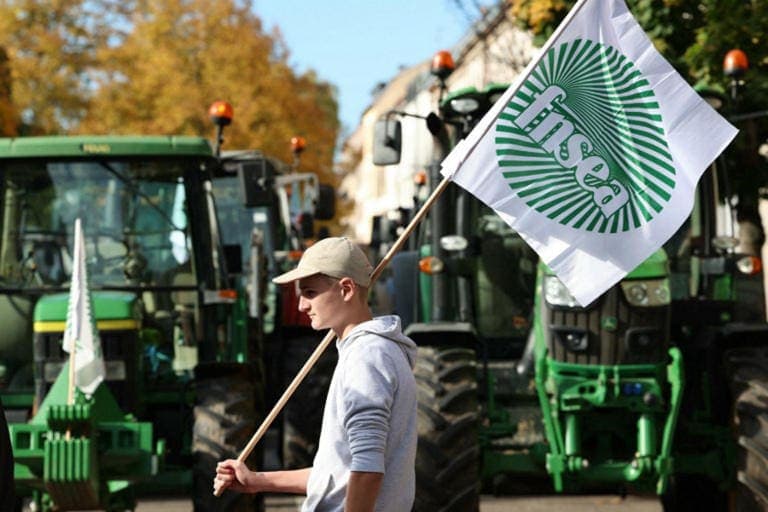
In France, the successes of the farmers' protests are once again at risk of being undone by impending political changes. The fall of the government due to a vote of no confidence has caused consternation in parts of the agricultural sector.
The Association of Agricultural Chambers called it a “real catastrophe” and said that the sector must not be held hostage by political disputes. The farmers' association urged farmers to temporarily stop cooperating with official inspections on the farmyard. Such threats, however, are very common in the relationship between French farmers and the government in Paris.
The chairman of the French farmers' association (FNSEA), Arnaud Rousseau, urged all farmers on social media to hold parliamentarians accountable in their constituencies and ask how previous promises will be fulfilled. According to Rousseau, farmers should also refuse all official inspections until the concessions have been implemented.
Promotion
The FNSEA president called on the future prime minister to immediately guarantee the implementation of all previously announced measures after their inauguration. It is not yet known who will succeed Prime Minister Barnier. It is also uncertain whether there will be a new Minister of Agriculture.
Meanwhile, the smaller agricultural association Coordination Rurale (CR) remained explicitly neutral. That union holds President Emmanuel Macron responsible for alleviating farmers' concerns and fulfilling the promises already made by the Barnier cabinet.
Barnier recently announced that he would meet the central demands of the protesting farmers. President Macron has emphasized that he will appoint a new prime minister as soon as possible. However, it is still completely unclear on which parliamentary coalition the new government can rely and to what extent it will feel bound by the commitments of its predecessors.
As is known, no parliamentary faction achieved a majority in the July parliamentary elections. Surprisingly, the left-wing alliance ‘New People's Front’ (NFP) became the largest faction with 182 parliamentarians. The Macron-centered centrist group won 168 seats, while the right-populist Rassemblement National (RN) and extreme allies hold 143 seats in the National Assembly.
The left-wing alliance was not part of Barnier's cabinet. The conservative Republicans, on the other hand, have only 46 members in the lower house but still hold several ministerial posts, including the current head of the agriculture department, Annie Genevard.