

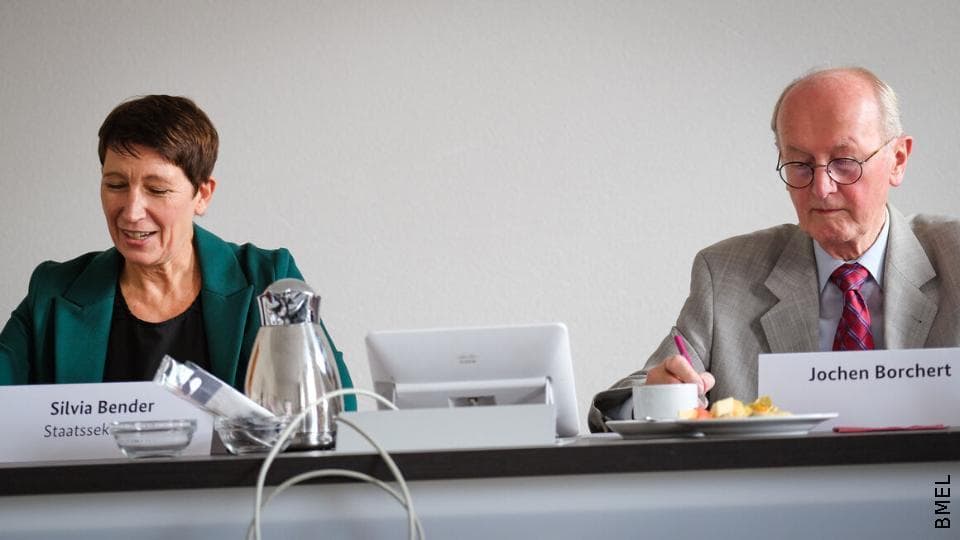
The advisory committee was established a few years ago by then Minister of Agriculture Julia Klöckner (CDU) and was chaired by former minister Jochen Borchert.
Experts from politics, science, industry, and animal welfare organizations subsequently devised an extensive modernization package that also took environmental, climate, and animal welfare considerations into account. This transition was estimated to require a multi-year investment of 4 billion euros.
However, the now incumbent center-left German 'traffic light coalition' has been unable to agree on the financing for months and has so far only agreed on an additional 150 million euros for extra animal welfare.
Promotion
A major question is who should pay the billions needed to convert barns and cages in dairy farming as well as in the poultry and pig industries. Should there be a 'meat tax' so that only meat-eaters bear the production costs of their meat consumption, or should taxpayer money (from everyone) contribute?
Within the federal government, the FDP liberals oppose tax increases, while the Greens believe that 'the polluter pays.' In the SPD, there are questions about why taxpayers or consumers should foot the bill for new pig barns when the large German meat corporations have earned millions in recent years but invested little or nothing in improved animal welfare.
The political disagreement over financing is also related to Berlin's desire to centralize agricultural policy. Under previous German CDU governments, the states had extensive regional powers. The states want to maintain these but do not want to co-finance the billions required for the transition advocated by Borchert.
In the southern German state of Bavaria, regional elections will be held on October 8. For years, this has been a traditional CDU/CSU stronghold of a conservative nature. Party leader Söder and the European EPP group leader Manfred Weber have been campaigning for weeks there in support of farmers and against both Berlin and Brussels.
According to Markus Söder, Minister-President of Bavaria, the dissolution of the committee is "a clear rejection of the failing policy of Green Minister Cem Özdemir," adding that "the ongoing conflicts between the states and the federal government have undermined the credibility of the committee."
The collapse of the Borchert committee, he says, is the fault of the traffic light coalition, not of the decades-long CDU/CSU officials in Berlin and the states.