

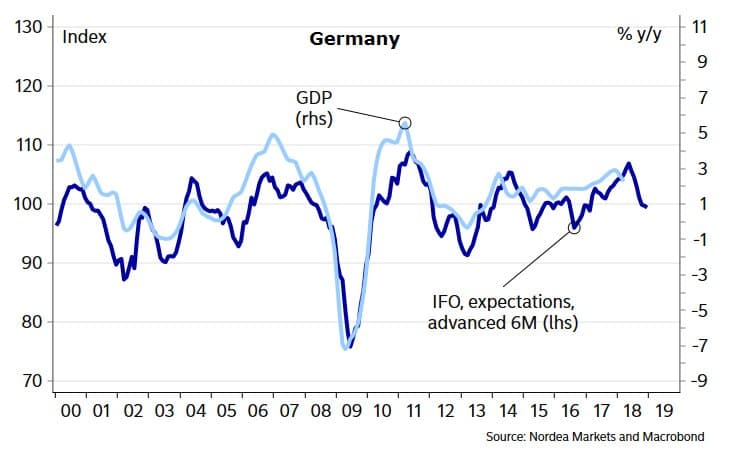
Many did not expect the German government to reduce the projected growth for 2024 so significantly—from 1.3% to 0.2%. It came as "quite a surprise," says Almut Balleer from the RWI Institute for Economic Research in Essen. The cause is partly increased international uncertainty due to geopolitical tensions and the consequences of the war in Ukraine.
Nevertheless, Germany remains an economic powerhouse. Last year Germany overtook Japan and is now the world’s third-largest economy. This rise in the global rankings is mainly attributed to strong export performance, driven in part by growing demand for German goods and services abroad.
“A positive development is that inflation has become manageable,” said Finance Minister Christian Lindner. Wages and salaries have risen, which could enable Germans to spend money and stimulate consumption. However, people are still not spending as much as expected and are choosing to save, according to the latest figures.
Promotion
Last week, Germany received approval from the European Commission to contribute 1.3 billion euros to a plan by Indian steel company ArcelorMittal to make part of the steel production in German blast furnaces more sustainable. The subsidy will be used to build new furnaces fueled by natural gas, and later fully by renewable hydrogen, instead of the coal currently in use.
The installations will replace outdated factories in Bremen and Eisenhüttenstadt. ArcelorMittal’s German greening plan aims ultimately to reduce CO₂ emissions by 70 million tons over sixteen years.