

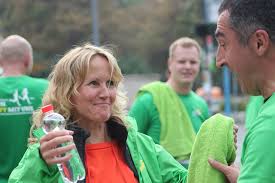
The new German Environment Minister Steffi Lemke (Greens) does not have the same tasks and authorities as her predecessor Svenja Schulze (SPD). This time, the Ministry of Environment's portfolio includes more of a ‘nature package’, focusing on biodiversity.
The ‘traffic light coalition’ in Berlin is linking German climate policy more closely with economic activity: international climate policy is assigned to the Foreign Affairs Ministry, while national and European climate policy goes to the Ministry of Economic Affairs. Both ministries are headed by Greens members: Robert Habeck and Annalena Baerbock, alongside party colleague Cem Özdemir at Agriculture (see photo). In exchange, the Environment Ministry now also handles Nature Conservation, Nuclear Safety, Consumer Protection, as well as product safety.
In an interview with the Süddeutsche Zeitung (SZ), Lemke described the new focus of her ministry as “strategically correct.” The Environment Minister names nature conservation as a new core task, alongside climate protection. Lemke literally said to the SZ: “The species crisis is the next big battle. It is at least as dramatic as the climate crisis.”
Promotion
In the interview with SZ, the environmental engineer Steffi Lemke describes carbon storage in agricultural soils and ecosystems as an important goal. To achieve this carbon sequestration, heathlands should be restored, near-natural forests should be created, and more water must be retained.
According to the Greens politician, biodiversity, agricultural production methods, lifestyle, and consumer behavior are closely interconnected. When fertilizer residues from fields in the North German coastal provinces flow into the Baltic Sea, it leads to algae blooms there. “Anyone who wants to can see it,” said the minister.
She said: “We know that industrial agriculture is the greatest threat to biodiversity. But no one would say, then we stop farming.” Also, restructured floodplains or rewetted heathlands could continue to be cultivated, just differently than now. The minister is open to expanding wind energy on land, including in forest areas.
At her first meeting with the European Environment Ministers on Monday, Steffi Lemke emphasized the importance of deforestation-free food production and imports: “Forest protection is absolutely crucial for achieving both climate protection and biodiversity.”
Producers must be able to prove that their agricultural products, for example, do not come from deforestation. The European Commission aims to make progress in this area in the coming months, as temporary EU Council President France has already stated.