

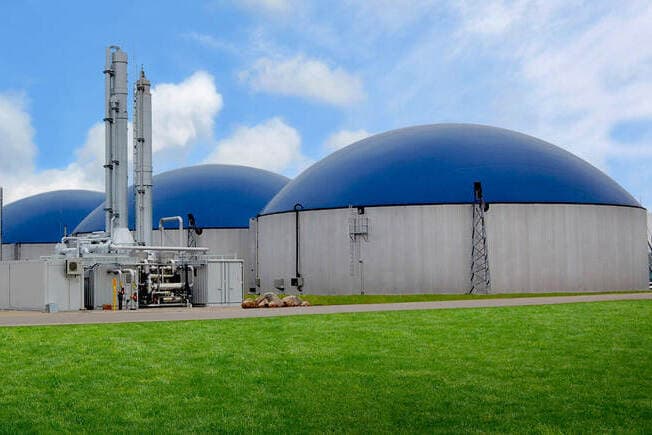
The German Nature Conservation Association warns that bio-methods are far less sustainable than switching to solar or wind energy, and that bioenergy from agricultural raw materials is more harmful to the environment and climate than wind turbines or solar panels.
Although Nabu acknowledges that biomass has a place in energy supply, the organization stresses that it should not be used on a large scale in transport, heating, or power plants, as this would be fatal for nature and the climate.
Nabu responds with their refutation of five bio-variants to a recent debate in the German Bundestag about promoting bioenergy, as part of the energy transition. Generating bioenergy could be a new income source for German agriculture.
Promotion
Nabu states that producing electricity from biomass consumes too much agricultural land. For example, the idea that biogas from pig manure could replace a quarter of Germany’s natural gas demand is, according to Nabu, unsustainable and unfeasible. This would require more than 400 million pigs in Germany — 20 times the current number.
Nabu also disapproves of the use of vegetable fuels instead of diesel and petrol. According to Nabu, the vegetable fuel from one hectare of land could power a car for 66,000 km, while the same area with solar energy could drive an electric car up to 4 million km.
Nabu is also critical of burning wood as a heat or energy source. The growing use of pellets and firewood is putting increasing pressure on forests, and without countermeasures, demand will double in the next 20 years. Nabu believes that wood should only be burned if there is no other useful purpose for it.
Finally, Nabu criticizes the promise that the entire world could soon fly environmentally friendly on frying fat. According to Nabu, sustainably available raw materials are lacking, and the current maximum export of 5 million tons from Asia is not even sufficient to meet the EU’s demand of 5.6 million tons.
Nabu does acknowledge that biomass can play a supplementary role but cautions against large-scale use in transport, heating, or power plants. Biomass could be suitable as a flexible, storable, and regional supplement, but only as a complement to electricity generation from wind and solar.