

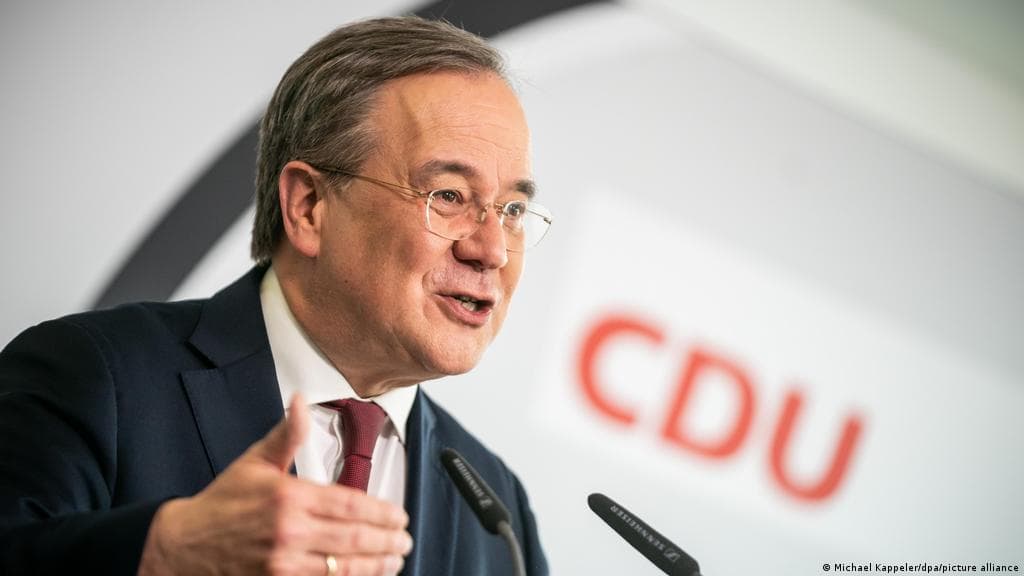
Also in the second live debate on German television between the three lead candidates on Sunday evening, there was once again hardly any discussion about agriculture, but much about climate, energy, and taxes.
Next Sunday will be the third and final live TV debate before election day on Sunday, September 26. The debate between Armin Laschet (CDU/CSU), Olaf Scholz (SPD), and Annalena Baerbock (Greens) attracted – just like last week – millions of viewers.
Visitors to the farmer-friendly news site Agrarheute reacted disappointedly to the lack of attention given to their sector. For several months now, a major agricultural modernization plan has been on the table in German politics (the Borchert Future Commission), but so far the political parties differ significantly on this – not only regarding the extent of the intervention but also on its financing.
Promotion
Because these German elections will not only determine who succeeds Angela Merkel as Chancellor, but also which three parties will form a governing coalition.
As a result, five parties are in contention that are quite close in voter support. Due to major disagreements about agriculture, taking too strong a stance can lead a party to price itself out of the future coalition market. That is why everyone currently has an interest in saying as little as possible.
The CDU made its own financing proposal this past weekend for the desired modernization. Like the Borchert Commission, this largely comes down to a food tax increase to be able to pay for modernization in the meat industry and agriculture. But each party has its own ideas about payment, and no one wants to antagonize farmers or housewives by default.
Many Agrarheute readers expressed their preference for Armin Laschet (46%). But opinion polls conducted by two German TV channels clearly identified Olaf Scholz as the best choice with just over 40% of viewers, with Laschet (27%) and Baerbock (25%) trailing far behind. In response to the question of who appeared most likeable in the one-and-a-half-hour broadcast, Baerbock led in both surveys while Laschet was behind.
Laschet and Scholz engaged in a heated debate about climate protection. They accused each other of blocking important issues. Baerbock made it clear that with the current pace of the CDU/CSU-SPD coalition, the climate targets clearly will not be met.