

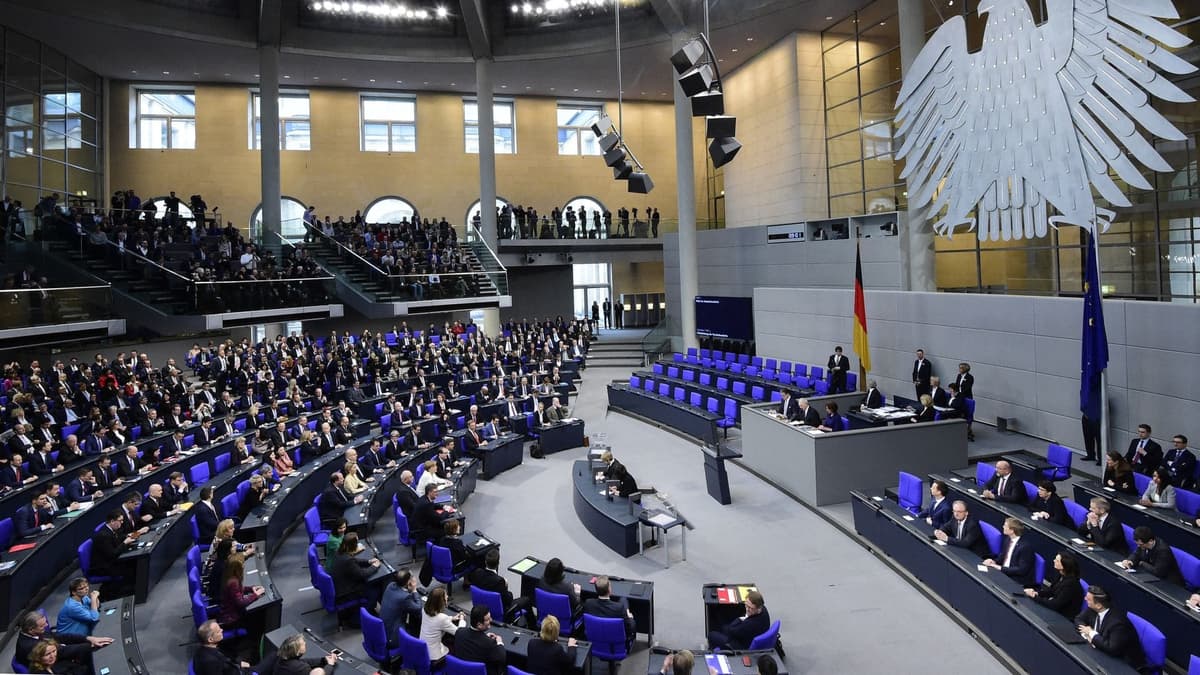
Proposals from Agriculture Minister Cem Özdemir (Greens) for more animal welfare, new fertilizer laws, stricter pesticide use, and other environmental and climate laws have already been submitted to parliament and could be 'processed' in the coming months. For now, they are put on hold for a few months, but they are not off the table.
For the time being, there is mostly a lot of uncertainty in German politics, and the situation can change daily. For example, the first question is when elections must be held. Although there is now a split with the FDP, Scholz can temporarily continue to govern with a minority cabinet. He wants to make a decision in January and hold elections in March. The CDU opposition wants clarity already this week.
The Chancellor has said he wants the Bundestag to vote on a 'vote of confidence' only in mid-January. Scholz says he first wants to handle several urgent issues, such as the presentation of the 2025 budget this Thursday (whether that will proceed is now uncertain).
Promotion
That budget was largely prepared by the dismissed Finance Minister Lindner, but the three coalition parties had not yet agreed on some components. It is not expected that the FDP will now vote for that budget.
Additionally, Scholz (SPD) and Minister of Economic Affairs Habeck (Greens) want to submit their economic stimulus plan to the Bundestag. With billion-euro investments, they aim to revive the struggling German economy. The SPD and Greens also want the Bundestag to make decisions regarding expanding military aid to Ukraine.
If the vote of confidence in January (as expected) does not receive support from the FDP, Chancellor Scholz must present a new government within 60 days or call new elections. In theory, SPD and Greens could form a (limited, temporary) coalition with the opposition until the original election date at the end of September. But CDU leader Friedrich Merz has already rejected this.
Recent polls show that the CDU opposition could currently become the largest party (with over 30%), but in eastern Germany the far-right AfD emerges as the largest from the ballot box. Moreover, the new BSW alliance of Sahra Wagenknecht is strongly rising there. In three eastern German states, efforts are already underway after recent regional elections to form center-right governments of the CDU, BSW and AfD.