

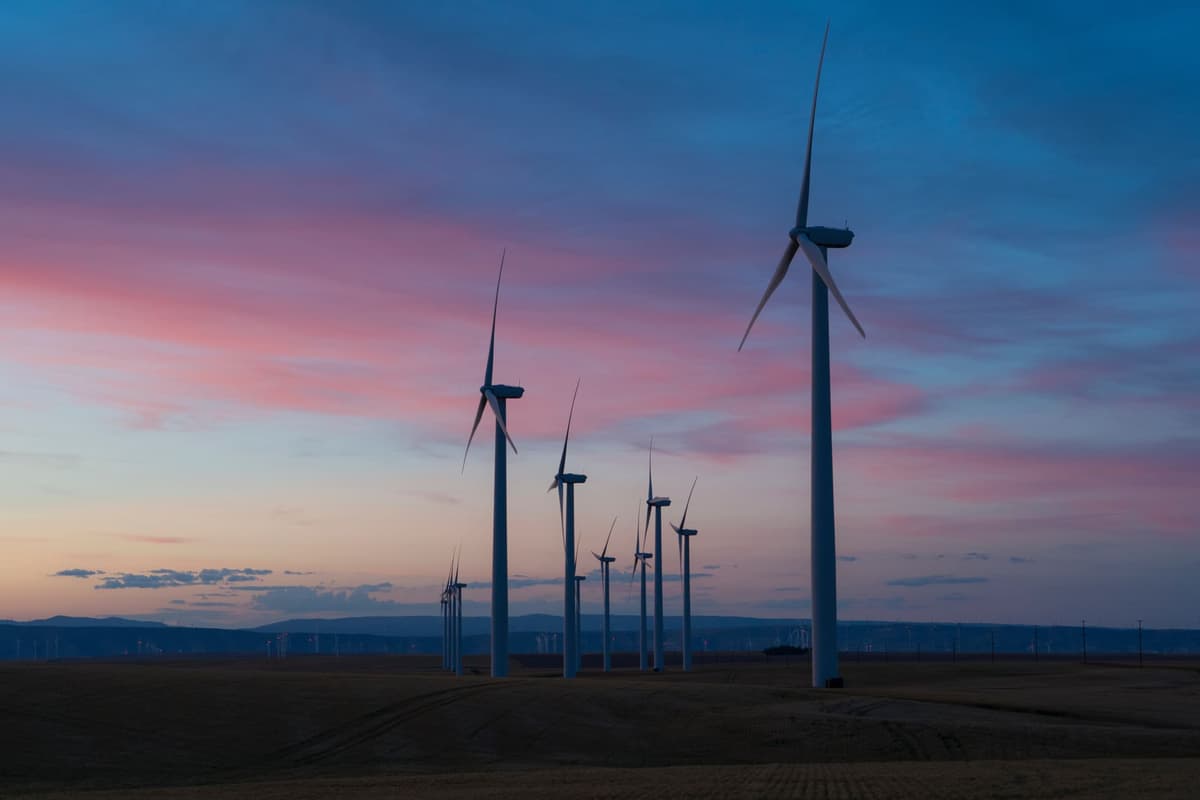
Germany is set to rapidly switch to more sustainable energy to reduce its dependence on fossil fuels such as coal and lignite, or on Russian oil and gas.
Within ten years, the production of sustainable wind and solar energy must be doubled, and in twenty years, offshore wind farms are expected to generate ten times as much electricity.
In the so-called 'Easter Package' presented Wednesday by Economy and Climate Minister Robert Habeck (Greens), a significant expansion of biogas production is also proposed. Germany is thus aligning with the 'energy package' presented last month by EU Commissioner Frans Timmermans in response to the Russian invasion of Ukraine.
Promotion
The plans represent a compromise in the sometimes controversial debate about biomass as a renewable energy source. Supporters argue that biogas production must be increased to reduce dependence on Russian gas.
The German Farmers' Association (DBV) also supports the expansion of bioenergy but considers the new German plans insufficiently ambitious. Despite the efforts, a financial perspective for the operation of biogas plants is still lacking, according to the DBV.
From the viewpoint of critics of bioenergy, all available arable land should primarily be used for food production, not for producing animal feed or agrofuels. A similar proposal is currently under discussion at the EU level.
According to experts, wherever biogas can be used without additional land use, for example by utilizing residues that are produced anyway, this is relatively unproblematic.
Besides energy issues, the Easter Package also contributes, according to Agriculture Minister Cem Özdemir, to maintaining and strengthening rural areas and agricultural incomes. He sees opportunities for solar panels and photovoltaic systems on arable land.
The German Farmers' Association DBV is less optimistic about this. According to the association, photovoltaic energy should "primarily take place on roofs to protect agricultural areas as much as possible."