

The German Ministry of Agriculture continues its public information campaigns on preventing African swine fever.
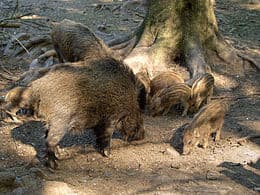
According to the federal government, there is sufficient laboratory capacity to conduct tests for African swine fever in the German livestock population. In neighboring Poland, a third of the country has now been designated as an 'infected area' with strict prohibitions in place. Eastern German states are currently installing fences along the border in an effort to prevent the arrival of infected wild boars.
Projects to detect and remove carcasses of dead wild boars using hunting dogs are underway in Saarland, Rhineland-Palatinate, and Schleswig-Holstein. The number of affected farms has risen again, with one of the new cases occurring just 50 km from the German border.
Promotion
The Chief Veterinary Officer in Poland has reported 7 new outbreaks of African swine fever (ASF) in pigs within the territory of the Republic of Poland. The outbreaks have increased significantly over the past two weeks. Since July 20, 30 new infections in pigs have been identified in the country. This situation not only necessitates the culling of thousands of animals, but also the inclusion of a large number of herds in the blue zones (transport bans).
Market observers in Poland describe the situation as dramatic. So far in the first half of this year, nearly 50,000 pigs have had to be culled due to ASF cases, exceeding the total for all of 2019. The previous year saw 48 ASF outbreaks in domestic pigs in Poland; there have already been 37 this year. All farm sizes have been affected—from farms with two pigs to fattening facilities with 9,500 animals. In 2019 alone, more than 35,000 pigs had to be culled.
Aleksander Dargiewicz of the Polish pig breeders’ association POLPIG states that ASF is not only impacting pig farmers but the entire food industry and has a substantial effect on the state budget. Transport restrictions in the blue zones render production unprofitable. The shortage of slaughterhouses that process pigs from these zones, which house 36% of the country's pig population, has drastically lowered purchase prices.
According to Dargiewicz, the fight against African swine fever is exceptionally difficult and particularly costly. He emphasizes that much more hunting of wild boars is necessary, carcasses must be removed from forests, and biological protection of pig herds needs to be developed.