

German Agriculture Minister Cem Özdemir wants to involve the seven wealthy Western industrial nations (G7) to maintain the export of Ukrainian grain. Germany currently holds the presidency of the G7 countries.
Özdemir aims to further secure Ukraine's access to global markets during an agricultural meeting scheduled for later this month. Russia has destroyed several Ukrainian ports along the Black Sea and blocked shipping routes with naval mines.
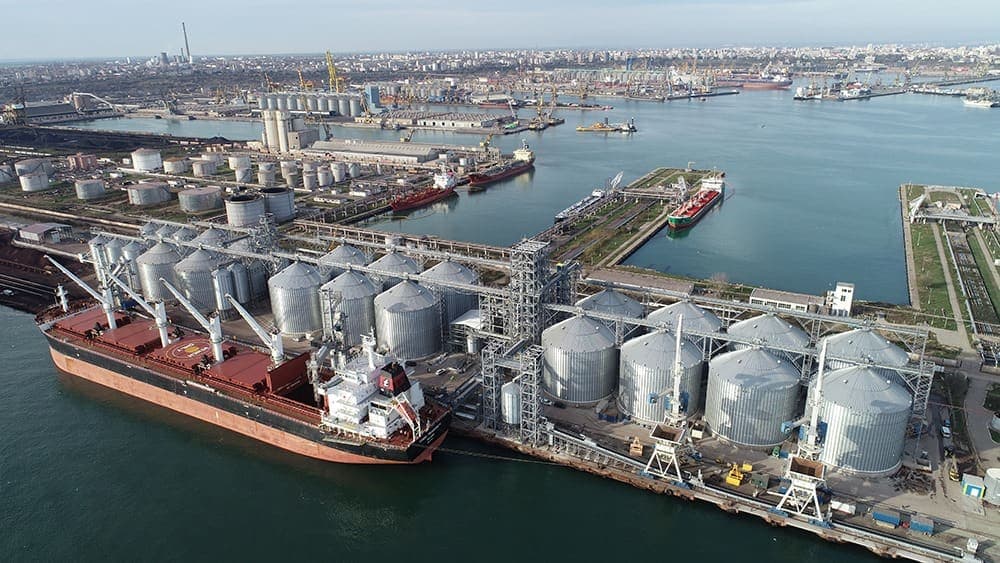
Ukraine is a major grain exporter, with most of its wheat normally exported by sea—about five million tons of grain per month. Ukraine is already attempting to transport agricultural products to neighboring countries Poland and Romania via rivers or roads to then export the goods through the Baltic Sea (Lithuania) or the Black Sea (Constanta). However, this is only partly successful.
Promotion
Alternative transport routes must therefore be opened, according to the German minister. Rail transport, for example via Poland, could be a solution but is problematic due to the different rail gauges in both countries. This requires all cargo to be transshipped at the Ukrainian-Polish border. Moreover, there is a significant shortage of containers.
Grain export is one of the main problems currently facing the Ukrainian Ministry of Agriculture, said Agriculture Minister Mykola Solsky in a recent interview with Ukrainian media. Exporting agricultural raw materials by sea is currently "practically impossible," said the project manager of a German-Ukrainian agricultural dialogue in Kiev, supported by the ministries of both countries.
EU Agriculture Commissioner Janusz Wojciechowski told Gazeta Polska in an interview that most fields in large parts of Ukraine have been sown, but it is uncertain whether they will be harvested, let alone exported.
The Ukrainian ports on the Black Sea must be reopened for grain export, otherwise a global food crisis threatens. David Beasley, director of the United Nations World Food Programme (WFP), says half of the wheat the WFP needs is stuck in Ukraine.
According to the WFP director, the loss of Ukraine’s granary will be felt worldwide for years. "Ukraine is the granary of the world. They grow enough food to feed 400 million people. Well, that’s gone," Beasley said this week on the CBS program 60 Minutes.
Last week, Russian forces also bombed and destroyed a grain transshipment facility in the eastern Ukrainian region of Luhansk. The Russian air force bombed a grain elevator near Rubizhne. Satellite images show that heavy Russian bombs were dropped on storage silos and buildings of Golden AGRO LLC.