

The European public has long been accustomed to purchasing fresh tomatoes, cucumbers, berries, and melons year-round. Most EU countries import the majority from Spain, where millions of tons of vegetables and fruits are cultivated in white plastic landscapes stretching over vast areas in the sunny southern part of the country.
And globally, greenhouse horticulture production is increasing, according to a new study from the University of Copenhagen, which calculated the worldwide extent of greenhouse horticulture. However, the major surge is not occurring in Europe but in low- and middle-income countries in the Global South.
The researchers used a combination of algorithms and satellite images to map how much land worldwide is used for greenhouse horticulture. It turns out that greenhouse horticulture – whether inside greenhouses or on open fields covered with plastic – covers at least 1.3 million hectares of the Earth's surface. This new figure is nearly three times higher than previous estimates.
Promotion
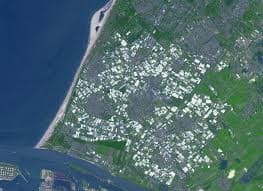
Greenhouse production is spread across 119 different countries, with China accounting for as much as 60.4% of the total area. Spain ranks second with 5.6%, followed by Italy at 4.1%. The Dutch greenhouse cultivation ranks ninth with just under one and a half percent.
While major clusters of greenhouses in the Global North emerged in the 1970s and 1980s, they developed twenty years later in the Global South. And where there is now some stagnation in the Global North, growth continues in countries in Asia, Africa, and Central and South America. Nowadays, the Global South emits 2.7 times more greenhouse gases than the Global North.
An important contributing factor to the ‘stagnation’ of glass greenhouse cultivation in the Netherlands is the sharply increased energy prices. Since EU countries decided to no longer purchase gas and oil from Russian companies, there has been a reorientation of business strategies in that sector.