

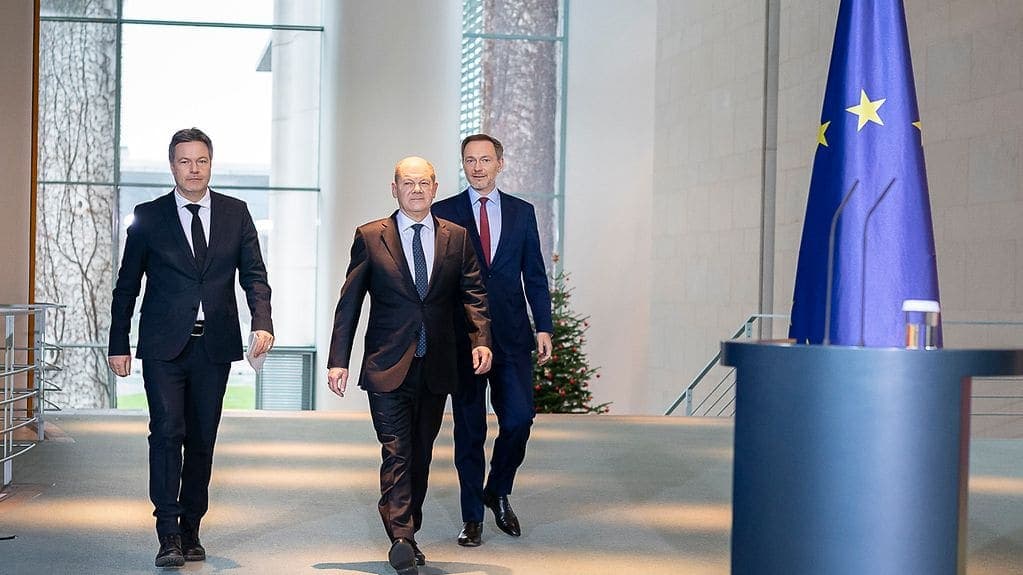
Vice Chancellor Habeck (Greens) emphasized that Germany must invest extensively in modern infrastructure and technology to future-proof the industry and accelerate the energy transition. The support targets all companies, from small and medium enterprises to large industrial players and startups.
The 'green' Economy Minister expects that such a 10% contribution can trigger investments worth billions. A similar tax measure was also applied after reunification in 1989 to modernize East Germany as quickly as possible.
Earlier, Habeck had already supported the EU analysis by former Italian Prime Minister Draghi, who urged EU countries to modernize their economies in order to avoid falling further behind the United States and China.
Promotion
Habeck’s proposal comes at a critical time, as the German economy threatens to fall back into recession again. Economic growth in Germany lags behind that of other European countries, with a contraction of 0.2% in 2024 and a decline of 0.3% in 2023.
German companies have predominantly responded positively to the proposed billions in aid. The industry especially welcomes the plans, considering the goal to quickly switch to sustainable energy and new technologies. For many businesses, the fund provides the much-needed financial incentives to make green investments that would otherwise be unfeasible.
Politically, however, there is division over the plan among the three coalition parties. The SPD supports the proposal and views it as a fundamental step. The liberal FDP is more critical.
Finance Minister Christian Lindner says the plan must be thoroughly limited. According to the FDP member, increasing national debt can be risky, especially in light of a recent constitutional court ruling on a previously rejected investment plan.