

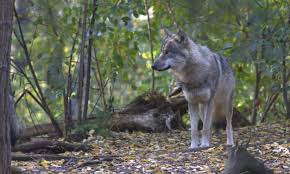
In the past three years, compensation for wolf attacks in Denmark has nearly tripled. Farmers on the mainland notice their sheep are increasingly targeted. Last year, a total of 122 kilometers of fencing was installed. According to a press release, Minister Jeppe Bruus has requested an investigation into whether wolf-resistant fences can be improved.
Denmark is slightly larger in area than the Netherlands, but this includes the three large islands east of the peninsula bordering Germany. Wolves have not yet appeared on these islands. According to the latest count, there are between 60 and 80 wolves living in Denmark, all in Jutland. The wolf migrated back to Denmark from Germany in 2012 after nearly 200 years of absence.
Recently, West Jutland has reported multiple cases of sheep killed by wolves. To better protect their livestock, many farmers are now taking measures themselves. Several hundred thousand euros in subsidies have been requested to install even more wolf fences, but attacks have still been reported.
Promotion
Discontent among Danish livestock farmers is growing. Following a recent attack behind a wolf fence, there was strong criticism of the minister. Farmers believe the government should take stricter action and implement better measures. They are calling for more support and clear policies to reduce the risk to their livestock.
Danish sheep farmers met earlier this month with Tripartite Minister Jeppe Bruus (S) after a wolf attack behind a wolf-proof fence was recorded for the first time, according to the Danish Sheep Breeders Association. 'This is what we feared. We already suspected that a wolf-proof fence of 1.10 meters would not be enough. More must be done to protect the animals.'
Agriculture Minister Jensen has stated that he also wants fewer wolves in Denmark but did not specify numbers. He believes solutions should be sought jointly at national and European levels. The idea of controlled wolf hunting is also being discussed in Denmark.
At the European level, work is underway to relax the strict wolf hunting ban following the recent easing of the Bern Convention. It is now necessary to adapt European regulations to the new situation. Such a change must still be approved by EU bodies but could have major consequences for all EU countries.