

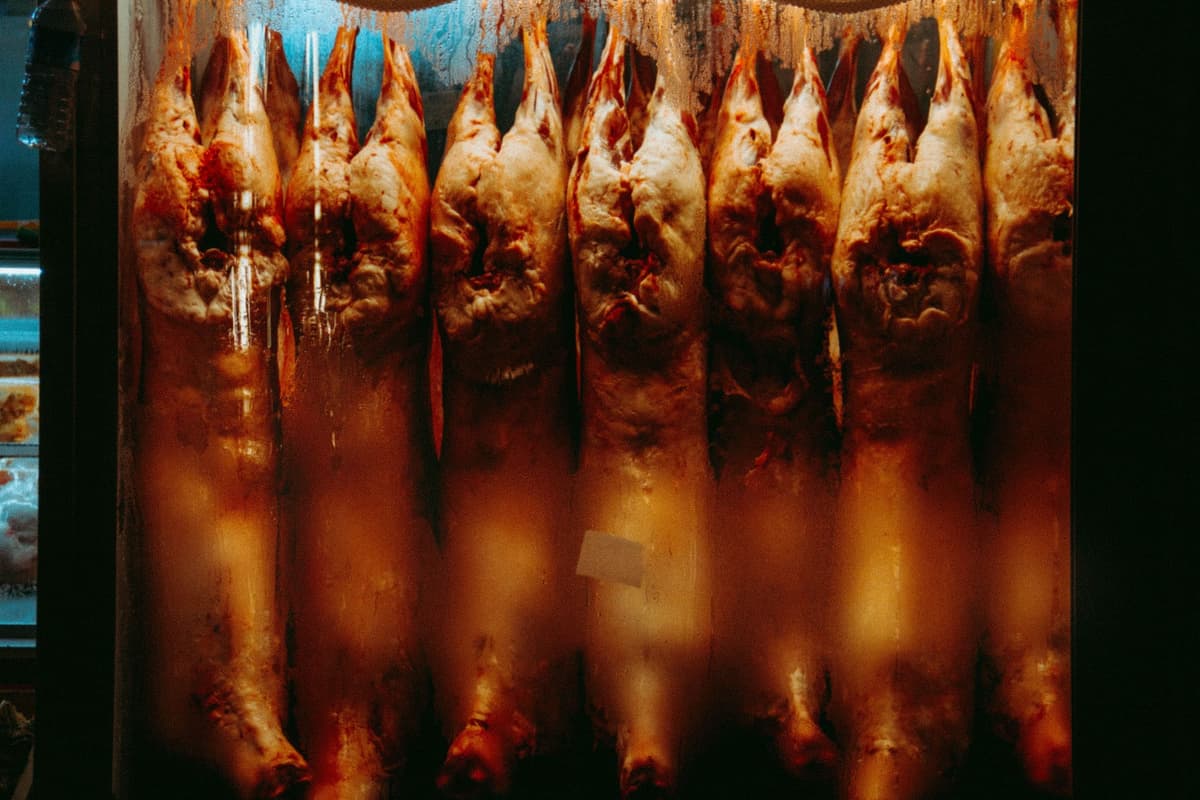
Nearly three-quarters of the world’s largest meat and dairy companies are classified as having a ‘high pandemic risk’ in a study conducted by investors and stakeholders.
Investors are increasingly critical of the meat industry ‘due to their inability to prevent the emergence of new zoonoses’. The vulnerability of these sectors has led the major and influential investment bank Goldman Sachs to name the livestock and meat industry alongside oil as two of the most precarious commodities for investors.
In the United States, the closure of meat plants caused multinational Tyson Foods to warn that the ‘food supply chain is breaking’. The meat companies examined were ranked from high to low risk across seven criteria, including worker safety, food safety, deforestation and biodiversity, animal welfare, and antibiotics. No company fell into the “low risk” category.
Promotion
Well-known names in the study include the Brazilian JBS and the Indian Venky’s – both suppliers to McDonald’s among others. Leaders such as Summer (China), Industrias Bachoco (Brazil), Cal-Maine Foods (US), and Venky’s (India) top the rankings. Norwegian fish firms Mowi, Bakkafrost from the Faroe Islands, Learoy Seafood from Norway, Fonterra in New Zealand, Cranswick (UK), and Montrig Global (Brazil) are in the mid-range.
No Dutch companies appear on the FAIRR risk list. The Netherlands is one of the world’s largest exporters of meat, agricultural, and food products.
The report was prepared by FAIRR, a global network of institutional investors, and warns of worldwide threats to investors. Their report coincides with worldwide closures of dozens of meat-processing companies due to COVID-19 infections among sick employees.
The study concludes that the livestock and meat sector is struggling due to the coronavirus crisis, and that the pandemic could potentially deliver a fatal blow to the industry. FAIRR concludes that this study ‘demonstrates that intensive animal production is at high risk of creating and spreading a future pandemic.’
The ranking is based on a series of seven criteria deemed essential for preventing future zoonotic pandemics. These include worker and food safety, deforestation and biodiversity management, animal welfare, and antibiotic stewardship.
The study, titled ‘An Industry Infected,’ warns investors that the meat industry will soon face increased oversight and regulation, which will be accompanied by new biosecurity protocols to reduce the outbreaks of diseases.