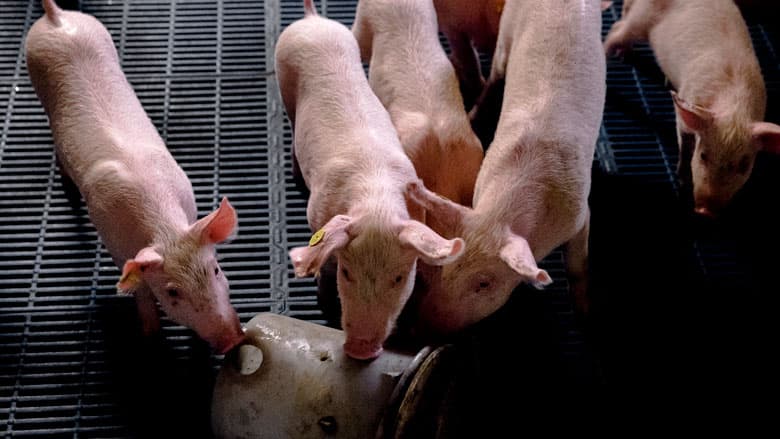
For example, last year over 300,000 Danish pigs were transported to Serbia. Poland and Germany are by far the largest buyers of Danish piglets. More than a million went to Italy, as well as to other distant destinations.
The maximum allowed travel time in a single trip is eight hours, followed by a mandatory rest period of 24 hours. In many EU countries, there are calls to further restrict live animal transport, but the current European Commission ultimately decided against it at the last moment.
The EU sets the rules for transporting animals departing from an EU member state. These rules are laid down in the transport regulation, which came into effect in 2005 and has therefore not been updated for nearly twenty years.
New Danish data on long transports also shows that only 0.65 percent of pigs were transported abroad for slaughter. Over 98 percent were pigs for 'further breeding', meaning piglets intended for fattening in a foreign herd.
"Last year, Danish farmers exported more live pigs for the first time than were slaughtered at home. And now the figures show that the vast majority are piglets subjected to long transports lasting more than eight hours. This is reprehensible and a wrong direction for our food production," says Britta Riis, director of Dyrenes Beskyttelse.
Especially queues or other stops along the way cause rising temperatures in trucks carrying animals during the summer months, which generally do not have cooling systems in the compartments. With the record export of Danish pigs and the resulting long transports, the debate over the necessity of stricter regulations continues.