

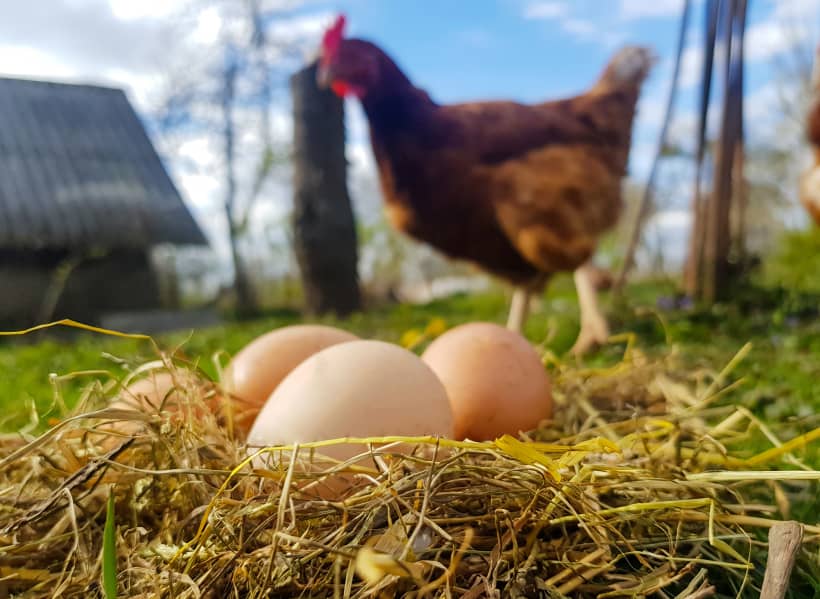
The Ministry of Health and the RIVM are launching a follow-up investigation to identify the possible sources of the PFAS contamination. The Netherlands Nutrition Centre states that the safest choice is to consume eggs from supermarkets, specialty stores, or markets. If people do eat eggs from their own chickens, it is advised to alternate them with supermarket eggs.
Earlier research by NRC and four municipalities around Dordrecht, as well as research by NOS in the provinces of Friesland, Utrecht, and Limburg, had already revealed that tested eggs from hobby chicken keepers contained excessive amounts of PFAS. A weekly intake of PFAS through consumption of, for example, eggs over an extended period may lead to health risks.
Due to concerns about public health, the Dutch Food and Consumer Product Safety Authority decided to conduct a risk assessment. The NVWA has advised the minister to warn the public and to initiate a follow-up investigation.
Promotion
PFAS is a collective name for a large group of non-degradable chemical substances used, among other things, to make consumer products resistant to grease and water. Some PFAS can be harmful to health, according to researchers. In recent years, based on scientific research, a new, lower threshold has been established for the maximum acceptable daily intake of PFAS.
A specific case of PFAS pollution recently receiving considerable attention in the Netherlands is the long-term contamination by DuPont/Chemours near Dordrecht. Local authorities have repeatedly emphasized the need for measures to address the pollution and to hold those responsible accountable.