

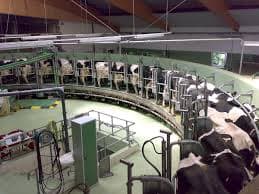
Dairy farming in New Zealand produced a record amount of milk powder last year. According to the New Zealand Dairy Association (DCANZ), production of dry milk powder increased by 0.8% to 1.903 million tons compared to 2019. The previous record in 2018 was 1.894 million tons.
Relatively favorable weather conditions and extensive grazing in the second half of the year contributed to the rise in total milk production. Compared to 2019, raw milk production increased by 85 thousand tons (0.4%) to 21.87 million tons. This is slightly less than the 2018 record of nearly 21.95 million tons.
In New Zealand, however, the focus is not so much on the calendar year but on the milk season, which runs from June to May. In the first seven months of the 2020/2021 season, raw milk supply was 13.60 million tons, which represents an increase of 105 thousand tons, or 0.8 percent, compared to June to December 2019. Production of dry matter from milk rose in the same period by 0.7% to 1.136 million tons.
Promotion
If New Zealand wants to meet its climate targets, the livestock population and milk production must be reduced by up to fifteen percent. This is recommended by a commission report presented recently, according to the NZ Herald.
The newspaper states that the current climate plans require a reduction of about ten percent, but by 2030, the livestock population must be further reduced if New Zealand wants to achieve its emission reduction targets.