

In a report submitted last week on the future of Dutch agricultural and food policy, it is acknowledged that this transition will be difficult and controversial.
The country report from the economists and specialists at the OECD was presented last week in The Hague to the Ministry of Agriculture, Nature and Food Quality (LNV). It states that the Netherlands has built an agricultural sector that is a world leader in productivity and competitiveness. However, environmental challenges are becoming increasingly urgent and the sector will need to adapt, the report adds.
Utilizing the strong innovation capacity of the Dutch sector will be crucial in finding long-term solutions that work for farmers, citizens, and the environment. The OECD believes that the Netherlands must now leverage this innovation power to make the sector more sustainable.
Promotion
The report builds on an earlier Netherlands report from 2015. That report found that acceptance of innovation had supported high productivity growth in agriculture. However, the OECD then doubted whether marginal technological improvements would be sufficient to reduce the sector’s environmental impact.
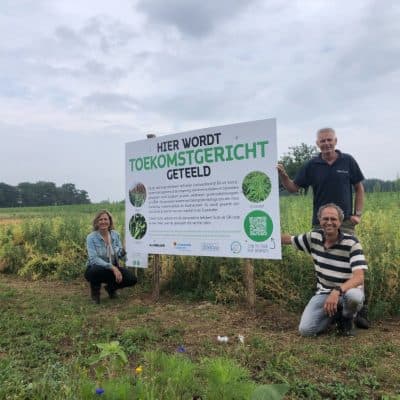
Over the past eighteen months, the OECD has conducted extensive desk research and numerous discussions with LNV staff and scientists about Dutch agriculture. In June last year, an OECD delegation visited the Netherlands for a three-day working visit. During that time, visits were made to LNV, Wageningen University and Research (WUR), the Floriade, and the Farm of the Future.