In addition to exports, problems will also arise with imports coming along this route, such as grapes from India, avocados from Kenya, and seasonal products from South Africa and Israel, according to the United Nations Food and Agriculture Organization (FAO).
Ukrainian apple exporters are already facing difficulties supplying markets in the Middle East. Suppliers from Poland, Italy, and Moldova are expected to encounter similar issues.
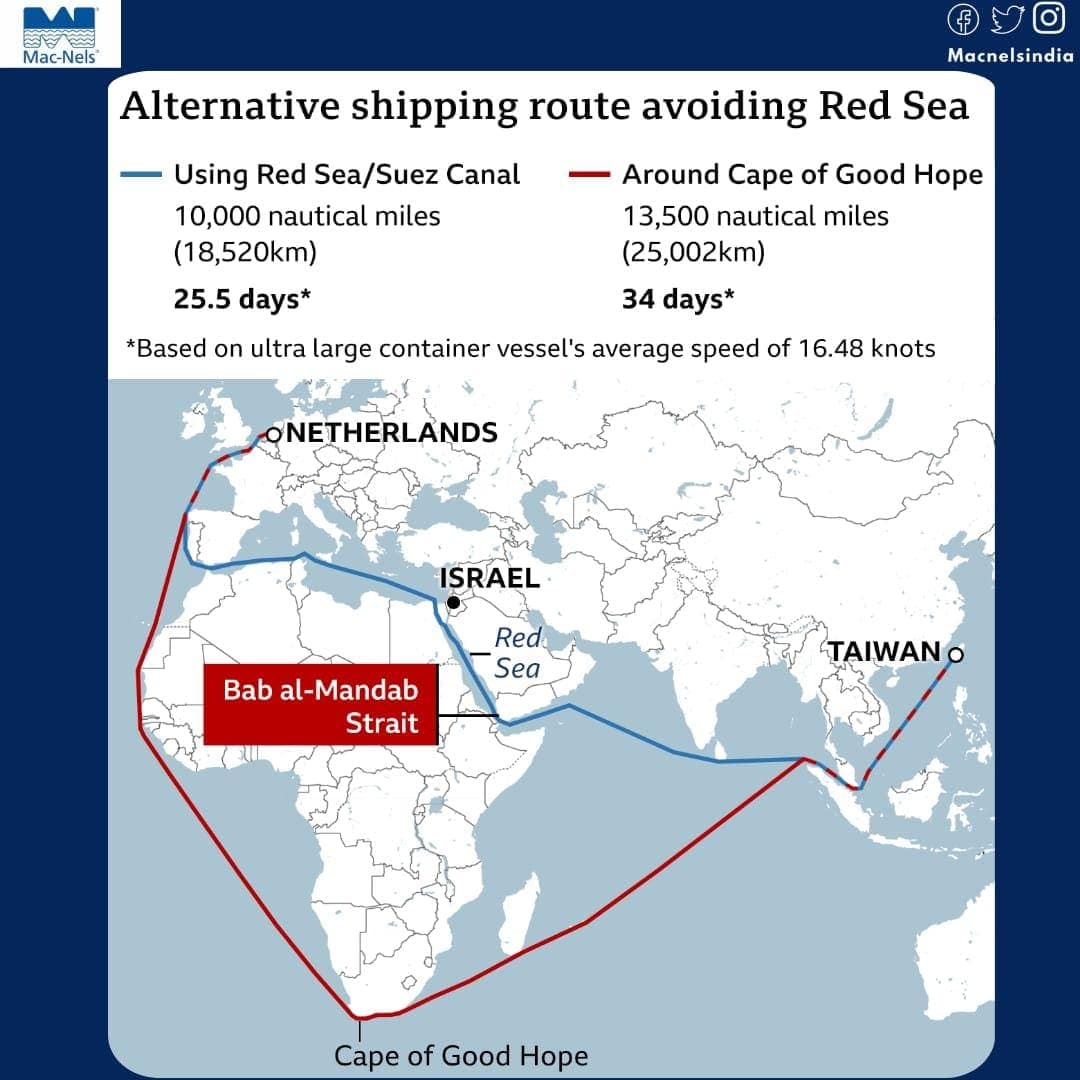
The Red Sea and the Suez Canal form the main global shipping route between East and West. Major shipping companies like Maersk and Hapag-Lloyd have already suspended their container transport on this route and are considering rerouting around South Africa. This would mean a shipping delay of roughly three weeks. Vessels already en route are waiting in safe zones until they can continue sailing.
The pro-Iranian Shia Houthi rebels control part of Yemen. For several weeks, they have been attacking international ships off their coast to exert pressure on Western companies in the Israel-Palestine conflict.
Oil exports from Saudi Arabia and the United Arab Emirates to Europe and the United States are also entering the danger zone. This will initially lead to delays and rerouting but not immediate shutdowns of oil sources. The American investment bank Goldman Sachs estimates that seven million barrels of oil per day are shipped through the Bab el-Mandeb Strait, which will be rerouted. This will also push up spot prices for crude oil by $3-4.
Chinese automaker Geely warned Friday that sales of electric vehicles are likely to be affected by delivery delays due to the 'situation' in the Red Sea. If the Red Sea problem remains unresolved, shipping companies are expected to adjust freight rates, leading to rising transportation costs, the company added.