

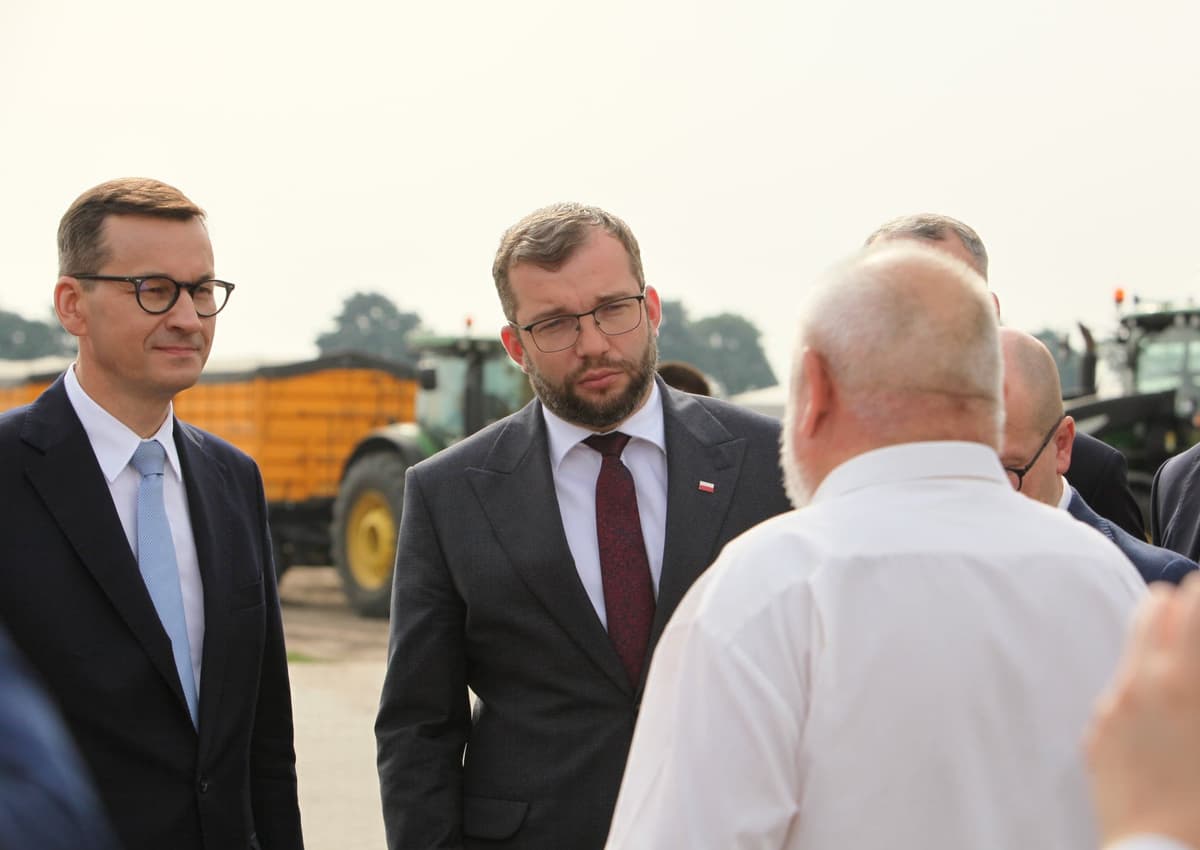
The Polish governing party Law and Justice (PiS) has promised Polish farmers more financial security and practical support within two years. Prime Minister Mateusz Morawiecki and Agriculture Minister Grzegorz Puda said that more than 95 percent of all farmers will soon receive at least the same or more EU subsidies per hectare.
The PiS party meeting in Przysucha was entirely focused on the recently presented Agriculture Budget. However, the politicians did not address the current situation in which a conflict with the EU over the Polish judiciary threatens to suspend the payment of CAP subsidies.
“A Polish farmer is in no way worse off than a German or French farmer. Therefore, we will do everything to ensure that in the coming years the level of subsidies is the same or higher than the EU average,” said the head of government during the PiS convention on the Polish countryside and agriculture.
Promotion
“Catching up” to other EU farmers is a very sensitive issue in Poland. When the country joined the EU in 2004, it received lower CAP amounts per hectare than the then-prevailing average. This gap has been somewhat closing in recent years.
The Polish prime minister also announced a new agricultural insurance against various types of disasters. Polish farmers believe that it should cover not only weather-related risks but also “natural disasters” such as African swine fever and avian influenza. However, the coverage and premium for such insurance have not yet been determined.
To combat the frequent droughts, farmers in rural areas will soon be allowed to build water reservoirs without permits. Subsidies will also be provided for the construction of storage facilities where they can keep their products to sell later at better prices, said Minister of Agriculture and Rural Development Grzegorz Puda at the PiS convention on Saturday.
He also added that he would like farmers who store their products in warehouses to be able to sell them “outside.” Every city will be required to designate a square or place where a food market can be held. Rural residents will no longer need permission or licenses to sell their local products.