

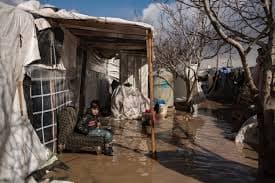
During protests on the Greek islands of Lesbos and Chios on Wednesday, dozens were injured after clashes broke out between local residents and police. Thousands of islanders are protesting plans to build new ‘closed asylum seeker camps’.
There has been unrest for some time regarding the arrival of these camps on the islands. Riot police reportedly used tear gas to disperse the crowd. On Chios, people stormed a hotel where police officers were staying. Protests against the establishment of a new camp are also taking place on the island of Samos and two other Aegean islands.
The islanders refer to these as ‘prisons’ and want to prevent the Greek government from transferring even more unauthorized asylum seekers to their islands. Tens of thousands of refugees and displaced persons have lived on Lesbos and Chios for years. Most come from the Middle East, having fled the ISIS caliphate in Iraq or the civil war in Syria.
Promotion
The refugees have tried to travel to Europe via Turkey and have crossed from Turkey’s west coast to the Greek islands in small boats operated by human traffickers. However, Greek authorities refuse to transfer the tens of thousands of refugees to the Greek mainland, much to the anger of local islanders and aid workers.
The government in Athens announced two weeks ago that it will accelerate construction of secured detention centers on five Aegean islands to replace the existing camps. The existing camps on the Greek islands are overcrowded. According to the government, the camps provide a safer situation for both migrants and local residents.
Since 2015, Greece has been grappling with a migrant crisis. The country has hosted more than a million refugees from the Middle East. Because EU countries cannot or will not agree on the distribution of asylum seekers, most remain in camps along the coasts of southern EU countries (Greece, Italy, Spain).
A few years ago, the EU signed a multi-billion euro deal with Turkey under which EU countries ‘contribute’ financially to refugee accommodations in UN camps in Syria, Lebanon, and Turkey, in exchange for Turkey closing the human trafficking routes to the Greek islands.
The arrival and reception of hundreds of thousands of refugees from the Middle East has already led to significant tensions and conflicts within Greek society over recent years. Residents of the Greek mainland do not want all these foreigners transferred from the islands to their regions. Conversely, the residents of the Greek islands are pleading with the government in Athens to make those transfers.