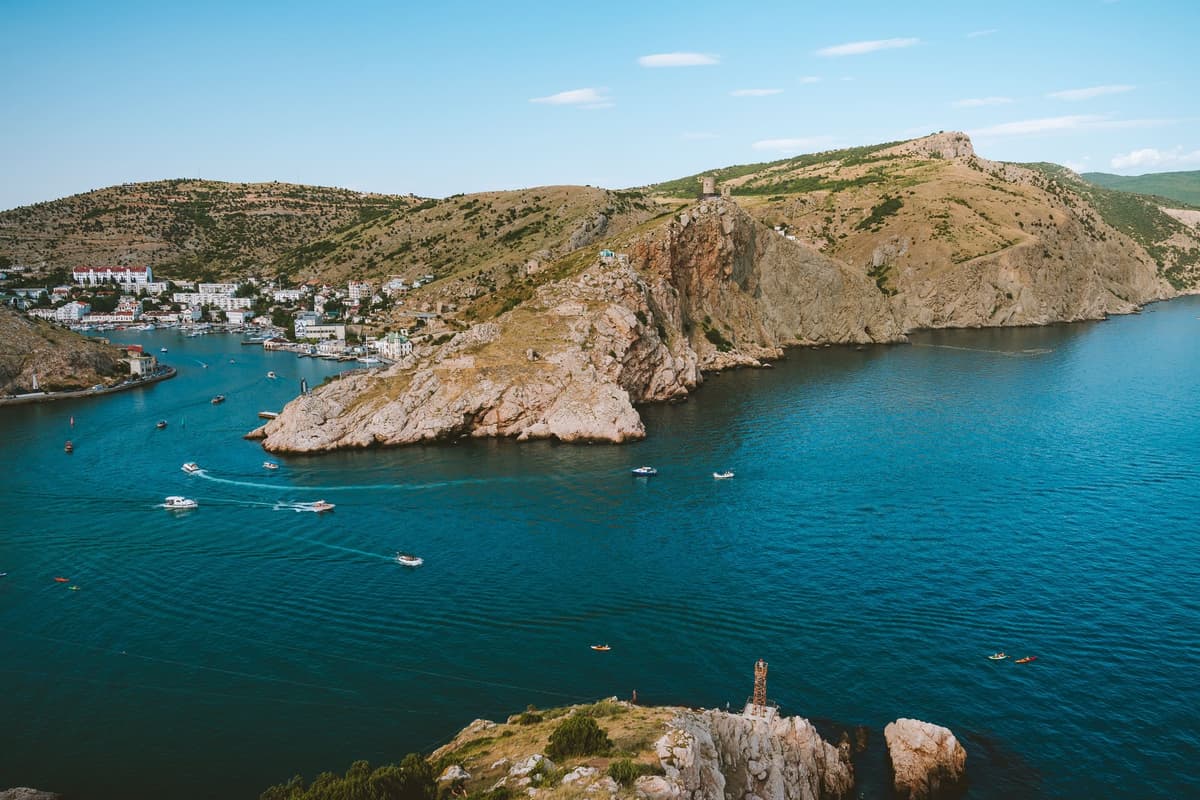
Russia has returned three Ukrainian naval vessels that were seized a year ago in the Kerch Strait to Ukraine. At the time, the three Ukrainian ships attempted to sail through the Kerch Strait from the Black Sea to the Sea of Azov. After the occupation of Crimea, Moscow declared that strait Russian waters.
Russian tugboats towed the three Ukrainian ships out to sea over the weekend from a port in Crimea. The transfer took place in neutral waters of the Black Sea. The international community had repeatedly urged the release of the ships. The 24 crew members of the ships were already released at the beginning of September as part of a prisoner exchange between Kyiv and Moscow.
The return of the ships precedes a possible ‘first’ summit between Russia and Ukraine. Russia has confirmed that a summit on the conflict in eastern Ukraine will take place on December 9 in Paris. This meeting will be the first encounter between Presidents Vladimir Putin and Volodymyr Zelensky. France and Germany are mediating.
Pro-Russian rebels, and according to unconfirmed reports also Russian soldiers, operate in eastern Ukraine. The rebels have declared an autonomous republic there, recognized only by Moscow. This area is also where the Malaysian MH17 plane was shot down.
The annexation of Crimea and Russian influence in eastern Ukraine are viewed by European and NATO countries as an expansion of Russia’s sphere of influence to the south and west, following earlier expansions during recent decades into regions of Georgia (Abkhazia and South Ossetia), Moldova (Transnistria), and parts of Poland and Lithuania (Kaliningrad).
Recently, there have been cautious moves towards reconciliation between Russia and Ukraine. Last week, Ukrainian troops and Russia-backed separatists withdrew from two villages in eastern Ukraine. Although relations between the countries have improved since the election of new Ukrainian President Zelensky, no agreement has yet been reached.
For any potential Russia-Ukraine agreement concerning the eastern rebel areas, Ukraine will in any case have to decide on some form of self-governance for the separatist regions. There is significant opposition to this within Ukraine. Local elections will also have to be held.
The conflict between Ukrainian government forces and pro-Russian separatists in eastern Ukraine has claimed nearly 13,000 lives since 2014. The Minsk peace agreements of 2015 repeatedly failed to be implemented, but progress has been noted since Zelensky’s election in April this year. There was the prisoner exchange, and forces from both sides withdrew from certain sectors along the front line.
The Russia-backed rebel war in the east, Russia’s occupation and annexation of the Crimean Peninsula, and the downing of the MH17 have also caused diplomatic tensions between Russia and European Union countries. Not only the EU states but also the international community have imposed economic sanctions and financial penalties on Moscow.
Behind the scenes, diplomatic consultations are ongoing at multiple levels, but so far without any result. Several European leaders advocate that Europe will have to find political agreement with Russia in some way and that the economic sanctions ‘cannot last forever.’
A possible agreement between Moscow and Kyiv (‘to normalize relations again’) could pave the way for other European countries to somewhat restore their contacts with Moscow to normal levels.