

Last year, Russia asked the Netherlands to transfer the prosecution of the three Russian suspects in the shooting down of the Malaysian passenger plane MH17 to Russian judges. The Netherlands responded to Moscow that this is not an option.
The Netherlands and Australia have previously held Russia partially responsible for the missile attack over rebel territory in eastern Ukraine. According to Dutch Minister of Justice Fred Grapperhaus, the Russian request was received by his ministry in The Hague on 17 October 2019. In his reply to the Russian authorities, Grapperhaus asked whether the Russians were willing to accept a verdict passed in the Netherlands and to enforce any penalties in Russia. It is unclear what Moscow’s response was.
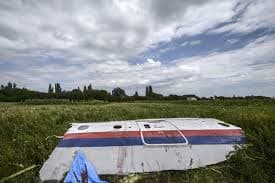
Flight MH17, en route from Schiphol to Kuala Lumpur, was shot down on 17 July 2014. This occurred over eastern Ukraine, where pro-Russian separatists were fighting the Ukrainian government army. The Boeing 777 was hit by a Buk missile from the Russian military. All 298 people on board died, including nearly two hundred Dutch nationals.
Promotion
Of the four men suspected of involvement in shooting down the plane almost six years ago, three hold Russian nationality. The fourth suspect is Ukrainian. When the trial against them begins on 9 March, they will almost certainly not be present. They are likely residing in Russia, which refuses to extradite them. Russia does not extradite its nationals. One of the Russian suspects has a Dutch lawyer, and another Russian suspect has two Dutch lawyers.
According to one of those lawyers, the case file already consists of about 30,000 pages. They have not yet received it, they say. Their involvement came about through Russian lawyer Elena Kutina. She is not allowed to represent the suspects here but provides relevant information for their defense.
On 9 March, the first day of the trial against the four suspects will take place. The trial will be held in the highly secured court, located in a large closed complex on the grounds of Amsterdam’s Schiphol International Airport. Dozens of court days have already been scheduled for the coming year. In this heavily guarded courtroom, trials are also currently underway against top figures of the Dutch drug mafia.
On Wednesday afternoon in Rotterdam, King Willem-Alexander of the Netherlands paid a visit to officials involved in the investigation and trial relating to the MH17 disaster. The king spoke with staff from the Public Prosecution Service, the Ministry of Justice and Security, and the police about, among other things, their personal experiences and the complexity of the investigation.
Police and judicial authorities from the affected countries — the Netherlands, Australia, Belgium, Malaysia, and Ukraine — have closely collaborated over the past years in investigating the disaster as part of a Joint Investigation Team (JIT). From day one, Russia refused to cooperate with the investigation, partly because it was not admitted to the JIT team. The matter has caused tensions between the Netherlands and Russia for years. Only very recently has there been minimal diplomatic contact on the issue for the first time.