

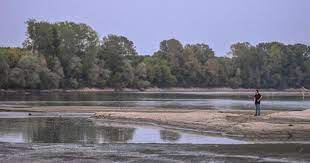
Due to the ongoing extreme drought in southern Europe, smaller harvests of winter crops are now expected for the third consecutive month.
In several countries, irrigation bans have been imposed, rivers are almost drying up, and even the drinking water supply is failing. The Italian agricultural organization Coldiretti said that 30 percent of agricultural production is at risk.
In Mediterranean agriculture, the yield potential of soft wheat has decreased in 13 of the 25 EU countries, with the largest declines in France, Hungary, Poland, and Romania. In Italy and Spain, the extremely hot and dry weather is also negatively affecting summer crops such as corn and sunflowers.
Promotion
According to the MARS bulletin (Monitoring Agricultural Resources) from the European Commission’s scientific service (JRC Joint Research Centre), the forecasts for the hectare yield of soft wheat are currently 2.2% below the five-year average, and that of durum wheat is down by 4.7%.
Southwestern Europe experienced an unusually early and intense heatwave in the past week. In Biarritz on the French coast, a temperature of as high as 42.9 degrees Celsius was recorded. In San Sebastian (northern Spain), it even reached 43.5 degrees. These are exceptionally high temperatures for southwestern Europe, especially so early in the summer.
Spanish water reservoirs are on average at half of their normal capacity. The situation in Andalusia, southern Spain, is extremely severe. There, reserves amount to only 35% of capacity.
In northern Italy, the Lombardy province has declared a state of emergency due to drought. Agriculture there makes extensive use of river water. The drought in the agricultural Po Delta is the worst in 70 years.
According to the news agency Ansa, water is already being rationed in more than 200 communities in northwestern Italy. The water levels of Lago Maggiore and Lake Garda are significantly lower than usual for this time of year, and the Tiber, which runs through Rome, is also low.