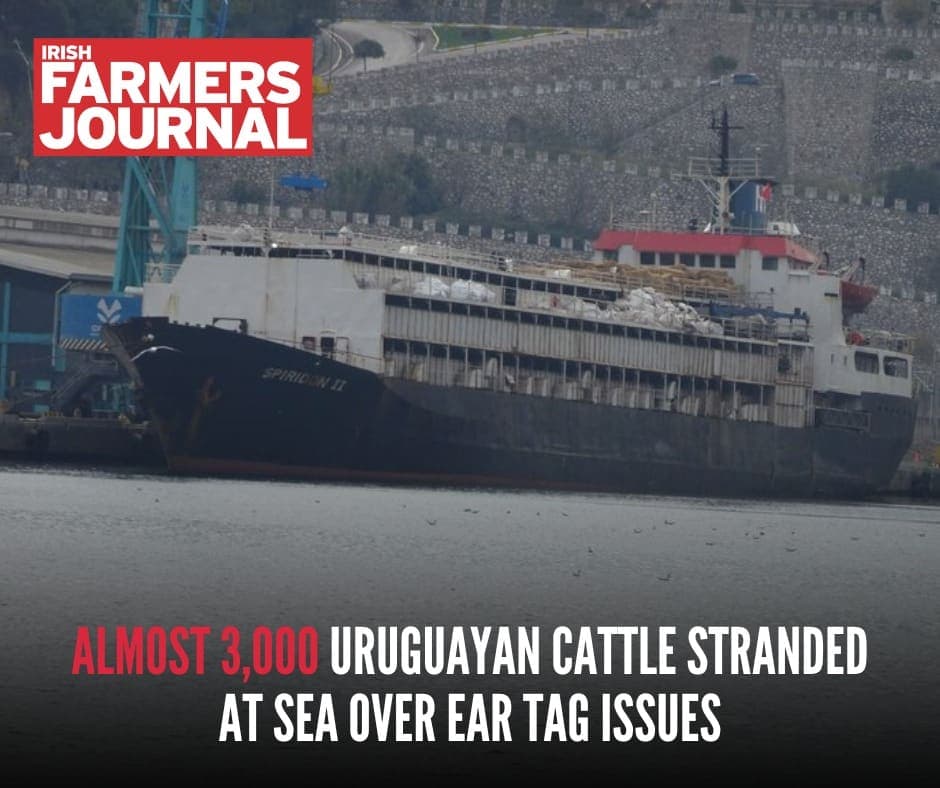
The ship departed in September from Uruguay with over 2,900 cattle destined for Turkey and transit to the Middle East. However, upon arrival it appeared that a large portion of the paperwork was incorrect. For example, ear tags were missing, data did not match, or identification was incomplete.
The Turkish authorities refused to allow the ship to dock. They stated that the decision was solely due to irregularities in the export documents. Turkey denied that there was any illegal transport or smuggling involved.
In recent years, large, outdated livestock transport ships have often been denied access to European or Turkish ports because of issues with import documents or the cargo. Due to fears of introducing animal diseases, strict admission requirements exist for animals.
Because of Turkey's refusal, the ship had to remain off the open sea for weeks. Due to the odor, it was not allowed to enter the harbor. The freighter could neither unload nor continue its voyage. The animals remained in the same area throughout, while the crew waited for permission.
This situation raised concerns about the animals on board. Multiple sources report that conditions worsened and that animal rights organizations warned of stress, exhaustion, and insufficient care.
During the voyage, at least 58 cattle died. The cause of death is not yet known. Nearly one hundred newborn calves were untraceable by the Turkish inspectors.
Meanwhile, the ship remained visible off the Turkish coast for weeks without any prospect of unloading or sailing onward. The combination of wait time, documentation issues, and deaths onboard increased concerns among animal welfare groups, who described the transport as irresponsible.
Eventually, the ship was granted permission to depart. As the livestock was not allowed to enter Turkey, the crew turned back toward South America. What will happen to the cattle remains unknown.