

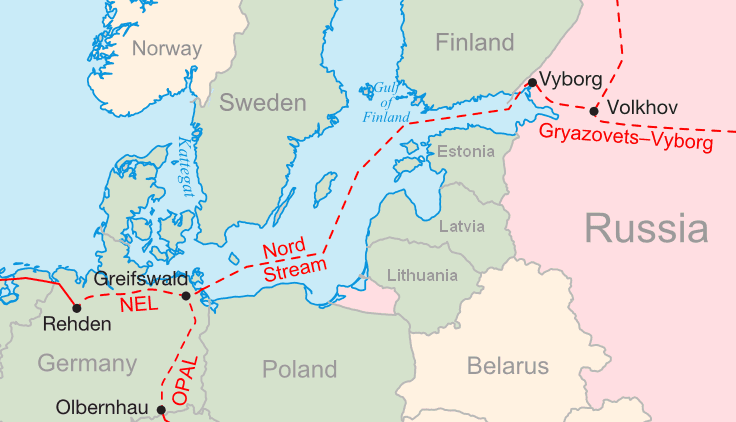
U.S. President Trump has signed sanction laws against the construction of the Russian oil and gas pipeline Nord Stream 2 to Western Europe. The United States says it will impose fines and sanctions on companies and individuals involved in this Russian energy export project.
The Dutch-Swiss company Allseas has meanwhile stopped work on the oil pipeline. “Allseas expects guidance from the relevant U.S. authorities on how it can proceed,” the company said in a statement. Moscow had previously said the project would be completed within a few months, but the pipeline construction could be delayed as a result.
Through Nord Stream 2, Russia can supply gas to Germany without crossing Polish or Finnish territory. The pipeline runs directly through the Baltic Sea. The United States has opposed the pipeline for years. The country fears that Russian President Vladimir Putin will gain more influence in Western Europe by supplying gas.
Promotion
The government of German Chancellor Angela Merkel has condemned the American measures and urged Trump not to interfere in European energy policy. “They have influence on German and other European companies, and we see the move as interference in our internal affairs,” said a spokeswoman for the German government.
The American sanctions are also opposed by the European Union. Brussels has already said it will take countermeasures if necessary. Russian President Vladimir Putin has also vowed “reciprocal” measures against the sanctions.
Nord Stream 2 is also very important for the Russians themselves. So far, they export their gas and oil to Western Europe via pipelines that run through Belarus and Ukraine. After Russia annexed the Ukrainian peninsula Crimea, the two countries have been at odds. Ukraine can shut off the Russian gas taps, preventing their gas from reaching EU countries.
Therefore, the construction of Nord Stream 2 is of enormous strategic importance for Gazprom and Putin: they will no longer be dependent on Kiev. Just last week, Russia and Ukraine reached an agreement on the supply of Russian gas to Europe via the current southern pipelines. An existing supply contract expires at the end of December. Russian Deputy Prime Minister Dmitri Kozak says the new deal covers a period of five years.
According to insiders, Russia has offered to pay Ukraine 3 billion dollars. In return, Kiev will drop a lawsuit against Gazprom claiming 12 billion dollars in damages for infrastructure seized in Crimea. This agreement is undoubtedly also a result of the recent first official talks between the two countries.
Gazprom currently supplies more than 36 percent of the total gas market in the European Union. Brussels was worried that the legal dispute between Kiev and Moscow would affect the gas supply and has mediated in the Russian-Ukrainian deal.