

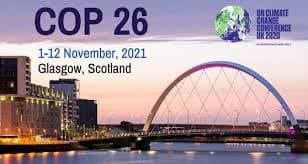
UN climate chief Patricia Espinosa warns that the world climate conference COP26, taking place next week in Glasgow, could very well fail. The conference chairman, British minister Alok Sharma, and Dutch MEP Bas Eickhout (GroenLinks) also fear that it will be ‘very difficult’ to reach a global agreement.
At the Glasgow summit, all countries must state what they will do to combat global warming, as agreed in Paris in 2015. Major polluters such as China and India have still not submitted plans, while the US and EU are already pushing for even more ambitious measures.
Since the historic Paris agreement, much has changed over the past years. Droughts, fires, and floods increasingly confront the world with the consequences of rising global temperatures. Climate youth have taken to the streets in many countries to urge politicians to act with more urgency.
Promotion
Industry and business sectors in some countries now seem to be shifting course toward a carbon-neutral economy. In the ambitious European Green Deal, a reduction of 55% CO2 emissions by 2030 and full climate neutrality by 2050 are legally anchored. But the question remains whether this will be enough to avert a temperature rise above 2°.
With current plans, the world is heading, according to the latest UN report, toward a warming of 2.7 degrees, with catastrophic consequences. “That would mean less food, likely a food crisis. It would make significantly more people vulnerable to miserable conditions, terrorist and violent groups,” said the UN envoy.
Conference chairman Sharma said in an interview with The Guardian: ‘What we are trying to do in Glasgow is actually very difficult. What they did in Paris was brilliant, but it was a framework agreement. Many of the detailed rules were deferred to the future. This will certainly be tougher than Paris on many levels,’ he added.
The chance that the UN climate summit COP26 in Glasgow will be as successful as the 2015 Paris summit is “almost nil,” says MEP Bas Eickhout. “At best, it will be half full, half empty,” he expects. Still, progress can be made on certain issues, thinks the GroenLinks politician, who himself will travel to the Scottish city in the second week of the summit. He is part of the European Parliament delegation.
The European Parliament hopes, among other things, that the elimination of fossil fuel subsidies will move closer during the summit. According to Eickhout (GroenLinks), Europe itself still needs to make much more progress in this area.