

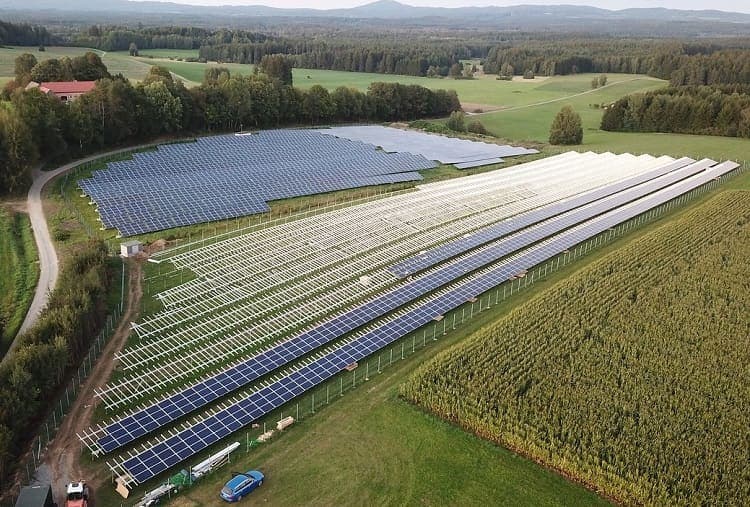
By the year 2030, at least three-quarters of German electricity consumption must come from renewable energy sources. Currently, Germans are already at around sixty percent. They want to quickly rid themselves of gas and oil imports from Russia and their own air-polluting brown coal-fired power plants. Due to government incentives for climate-friendly energy generation (solar panels!), this shift has been underway for several years.
As a result, prices for agricultural land in Germany are skyrocketing. For example, the establishment of a solar field (‘glass on grass’) yields 5,000 euros per hectare per year, ten times the average agricultural lease price. And for wind parks, this can even rise to 20,000 to 50,000 euros. These compensations make it difficult for farmers to retain land for their agricultural purposes, reports Agrarheute.
Landowners prefer to rent their land more lucratively to operators of solar energy or wind parks, and there is increasingly less land available for agriculture and livestock farming, reports Agrarheute.
Promotion
For farmers dependent on leased land, the challenges are even greater. In regions such as Rhineland-Palatinate, rental prices have tripled over the past fifteen years. Farmers now pay on average 600 euros per hectare, while solar energy companies offer up to 4,000 euros. Wind parks bring landowners even higher incomes.
In addition to the financial pressure, the ‘energiewende’ also affects the amount of available agricultural land. The German Farmers' Association (DBV) warns that around 80,000 hectares of agricultural land could be lost in the next five to six years, which equals 20 hectares per day. ‘Rural areas must not be developed to produce electricity for cities,’ DBV head Bernhard Krüsken recently said. The farmers' association therefore advocates better protection of fertile agricultural land.
Long-term lease contracts of 30 years or more with energy companies pose an additional risk for agriculture and horticulture. Much agricultural land that is used for other purposes long term can lose its agricultural zoning status. Lawyers warn that such long-term commitments further pressure farmers and strongly limit flexibility in land use.