The environment committee of the European Parliament narrowly approved several important proposals aimed at ensuring the EU Climate Goals and the UN Climate Agreement are met.
The Climate Laws spearheaded by European Commissioner Frans Timmermans aim for the EU to reduce CO2 emissions by 55 percent by 2030 at the latest.
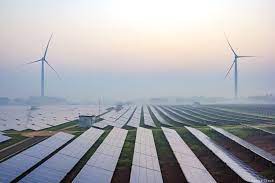
Under the new EU laws, agricultural management and the use of meadows and arable land will increasingly be subject to European climate protection criteria over the coming years. The new European energy plans (phasing out Russian oil and gas, reducing fossil energy, increasing solar panels, wind turbines, and biogas) will also have growing influence on the agricultural sector.
The environment committee agreed, among other things, with the new CBAM tax on CO2 emissions for imported products. This will also make imported fertilizer from non-EU countries more expensive. With a narrow majority, the Environment Committee adopted the proposals of the Dutch chief negotiator Mohammed Chahim (PvdA).
However, a proposal to decouple the already developing measurement techniques for 'carbon farming' from the newest measurement techniques for the storage capacity of various types of 'land use' was rejected by the environment committee. This would have excluded farmers from opportunities for EU subsidies for planting forests and hedges.
In fact, the EU is expanding the existing Emissions Trading System (ETS) to the rest of the world. This is a measure to reduce global greenhouse gas emissions. The aluminum, steel, cement, fertilizer, and electricity sectors will soon also be covered by this mechanism.
The free emission allowances that European industry still receives will be phased out more quickly. On Chahim’s proposal, the chemical industry will also be included in this.
The environment committee also approved the proposal that by 2035 only emission-free cars may be sold. Dutch MEP Jan Huitema (VVD) was one of the lead negotiators on this dossier. The proposal sets stringent targets for car manufacturers to reduce the average emissions of newly sold cars.
The European Greens wanted the polluting (petrol) combustion engine to be completely phased out by 2030, as also intended by the Dutch government. This proved impossible because many MEPs from car-producing countries (such as Germany, Spain, and Italy) strongly opposed it.
The factions of the Greens, S&D social democrats, the liberal Renew Europe, and United Left supported tightening measures in the environment committee to ensure emissions fall more quickly. It is uncertain whether the more ambitious proposals will gain a majority in the full parliamentary session next month. It is also expected that EU countries will oppose tightened elements.