

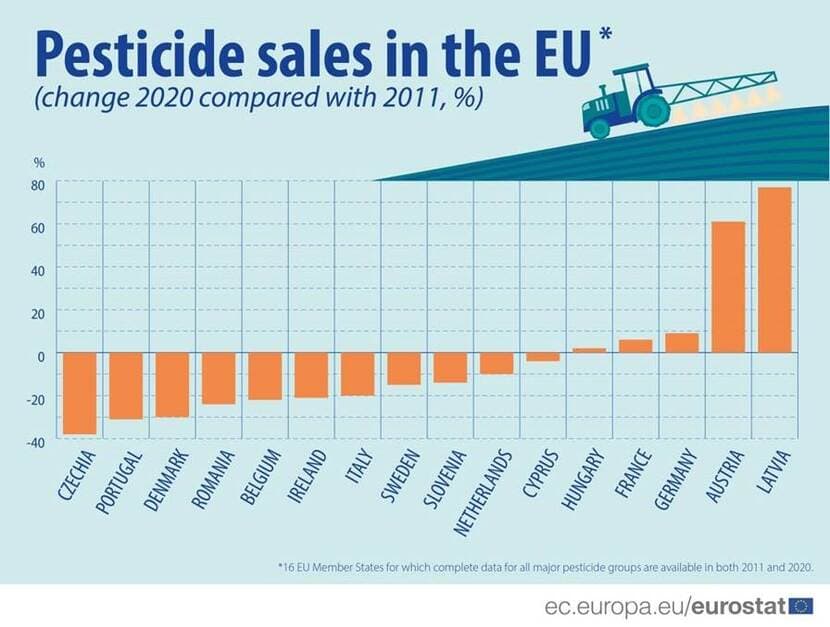
In agricultural circles, there is criticism that the EU wants to ban or reduce some products, but nothing is put in place to replace them.
The current procedures require that new pesticides not only gain approval from European authorities (such as EFSA), but also that national authorities (such as NVWA or Ctgb) conduct preliminary tests and issue advice. This process sometimes takes years. In the Agriculture Committee of the European Parliament, there have been repeated calls for a solution to this bottleneck.
A few months ago, the EFSA approval service management pointed out that the service has no budget to take over all testing from the 27 EU countries. However, apparently extra funds have been 'found' within the EU for the coming year.
Promotion
Agriculture Minister Piet Adema informed the House of Representatives that the European Commission recently presented a roadmap for increased use of biological crop protectants. With EU support, member states can recruit (additional) experts to assess new substances and products.
The Commission is currently concluding a study on the deployment of biological control agents and how they can enter the market. This is not yet harmonized at the EU level.
Furthermore, the European Commission updated the ministers of Agriculture and Nature at mid-December on, among other things, the approval of new gene technologies such as CRISPR-Cas. Brussels has started an impact assessment for new legislation this year and is expected to present a proposal in the first half of 2023.
In his report to the House of Representatives, Minister Adema further states that the Netherlands agrees with France’s call that the approval of new products is urgently needed to achieve the goals of the Farm to Fork strategy and the reduction of pesticide usage proposed by the Commission in June.