

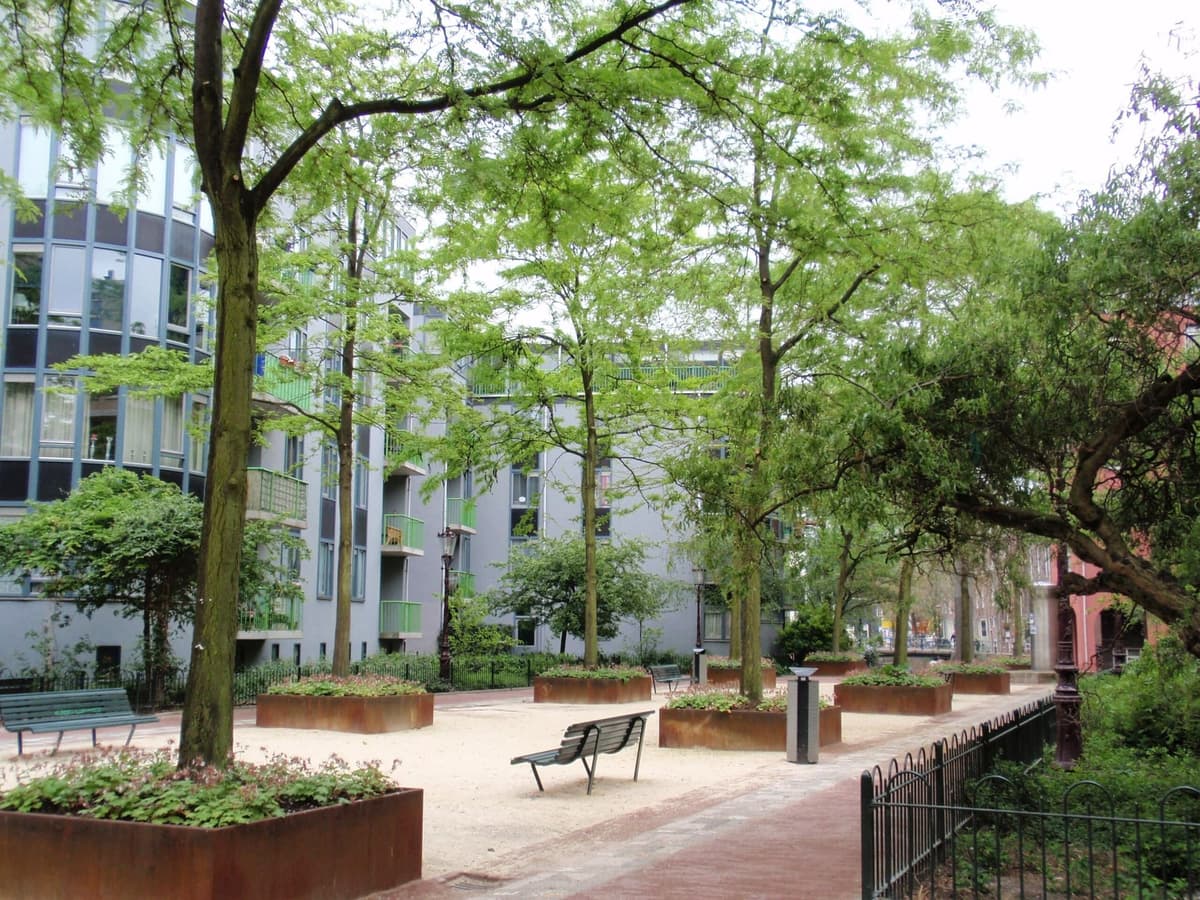
Researchers from the Barcelona Institute for Global Health suggest planting trees as a possible solution. This could reduce the annual number of deaths from heat stress by forty percent, they say.
As global temperatures rise, the number of deaths caused by heat-related factors increases in densely built urban areas. Extreme heat events are becoming more frequent, which in urban areas leads to so-called heat islands.
The researchers assessed mortality rates of people over 20 years old living in 93 European cities (totaling 57 million inhabitants) between June and August 2015. They also collected data on daily temperatures in rural areas and in each city.
Promotion
Temperatures in urban areas can be significantly higher than in the countryside because building materials like asphalt and concrete retain heat. In small urban forests, it can be as much as twenty degrees cooler than on a nearby sidewalk. Green spaces can substantially lower temperatures in cities, according to the study.
Currently, approximately 15 percent of the surface area in large cities is shaded thanks to trees. By planting more trees, heat stress is greatly reduced. Many city centers are already too hot, the researchers say.
Generally, cities with the highest heat-related mortality rates are located in Southern and Eastern Europe. These are also the cities that would benefit most from more trees. The authors acknowledge, however, that planting more trees in some cities may be difficult due to existing spatial layouts.