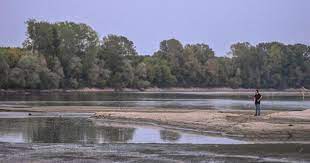
The persistent drought continues to seriously threaten the agricultural sector, and according to EU researchers, too little action is being taken. The lack of rainfall is already causing many farmers to be unable to irrigate their crops, and the availability of drinking water for humans and animals is at risk.
Drought is not a new phenomenon for Europe. With the exception of 2021, the continent has been struggling with severe droughts since 2018. Hydrologists and climatologists are already referring to this as a 'multi-year drought.' The major drought of last summer actually began as early as December 2021, according to an Italian study.
The Technical University of Graz goes even further. Using satellite data, Austrian researchers concluded that Europe has been experiencing a severe groundwater shortage for five years.
In France, new forest fires are now threatening the southern provinces. Although summer has yet to begin, the first forest fires have already occurred, and there are fears that more will follow if it does not rain.
France is far from the only European country already feeling the effects of drought. In Spain and Italy, the situation is barely any better. The Catalan government introduced regulations at the end of February to limit water usage. Agriculture is required to reduce use by 40 percent, industry by 15 percent, and every resident is urged to try to use 20 liters less per day.
The drought is also affecting agriculture in Italy, where farmers are forced to reduce their harvests due to low water levels. This is the second consecutive year that the Italian countryside has been affected by drought.
Drought in Europe is increasingly recognized as an environmental and climate issue. Last week, an international water conference chaired by the Netherlands took place in New York.
The conference aimed to strengthen international cooperation on water management and to find solutions to the increasing water problems. Representatives from more than 150 countries attended the conference.