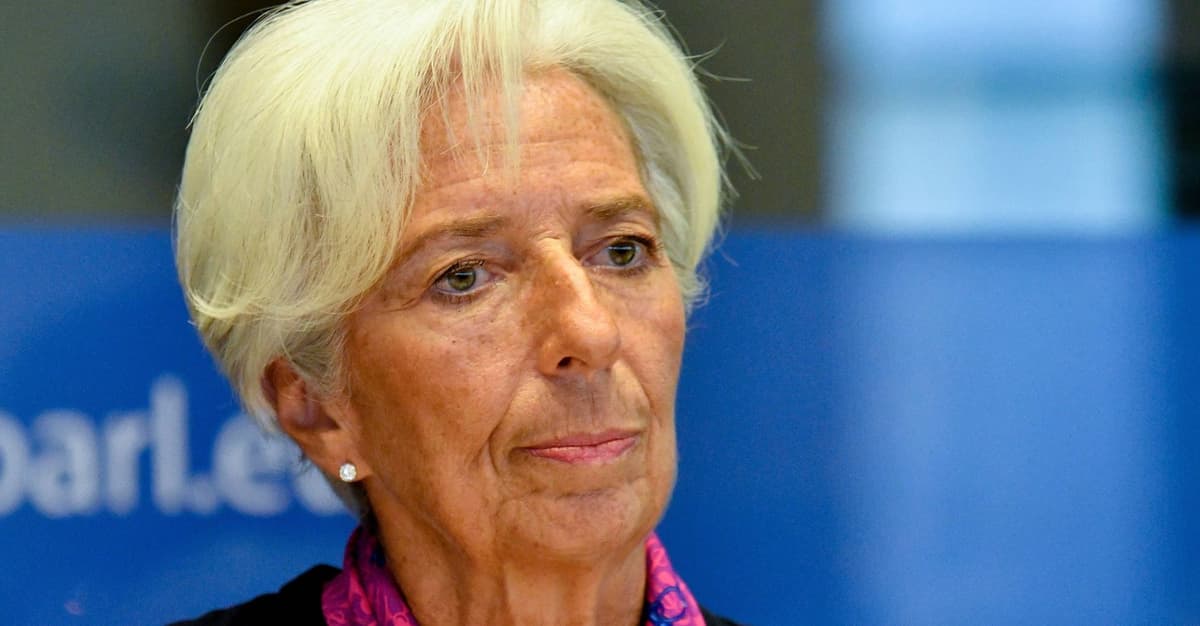
Lagarde will step down on February 7, 2027, eight months before her term was due to end. The former French finance minister has led the ECB since 2019. Her departure makes it possible to appoint the new president before France chooses a successor to President Macron in April.
Le Pen
The current French president can therefore still exert influence over the ECB appointment. European governments are concerned that a victory by Marine Le Pen would complicate negotiations over the succession. Macron himself cannot run again in the French presidential elections.
German Chancellor Friedrich Merz has announced that European government leaders want to designate a successor before the end of this year. The appointment will be part of negotiations among EU countries, where both candidates’ economic views and national interests play a role.
Lagarde herself has given a different explanation for her early departure. She wants to regain her freedom to speak out on political and social issues. As ECB president, she must maintain political neutrality. Lagarde has ruled out running herself in the French presidential elections.
Austerity
The possibility of Le Pen coming to power is also significant due to France’s financial problems. The high national debt and rising interest rates put further pressure on public finances. Le Pen has indicated that the ECB should help solve France’s financial difficulties.
There is division on this matter. Economists warn that financial assistance from the ECB without budgetary discipline would set a dangerous precedent. The central bank should only support France if Paris is willing to get its public finances in order (read: make substantial budget cuts). This could place the new ECB president at odds with a future French government.
Two Candidates
Two former central bank presidents are mainly mentioned as successors to Lagarde: the Dutchman Klaas Knot and the Spaniard Pablo Hernández de Cos. Knot led De Nederlandsche Bank from 2011 to 2025, De Cos headed the Spanish central bank from 2018 to 2024. Both have extensive international experience and witnessed previous European financial crises.
Knot is known as a proponent of strict inflation policy, although under Lagarde he became more pragmatic. De Cos places more emphasis on economic growth but also supported interest rate hikes and criticized his own government for delayed reforms. Their economic views are therefore closer than their reputations suggest.
Other Positions
Ultimately, political agreements may be decisive. Besides the presidency, the positions of chief economist Philip Lane and board member Isabel Schnabel at the ECB will also become vacant. France and Germany have interests in the distribution of these posts. European government leaders thus must not only choose a new president but also negotiate the future leadership of the ECB.