

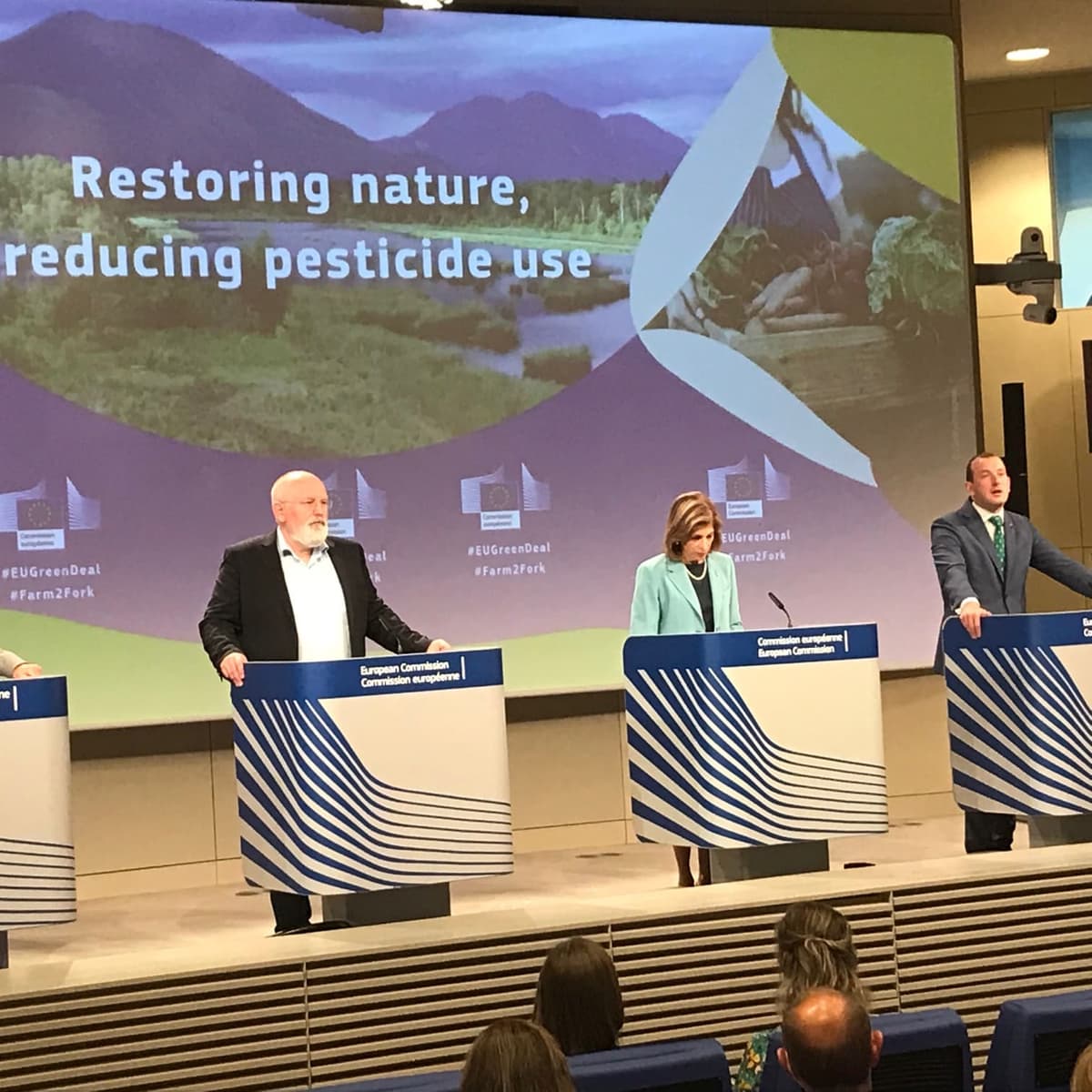
The European Commission has informed the parliamentary group specialists in the European Parliament and the 27 Environment Ministers that the proposed rewetting in peat meadow areas can be spread over larger areas. Also, the ten percent of agricultural land designated for ‘landscape elements’ would not be binding, but rather a ‘target figure’ that differs for each country.
The new interpretation is contained in a so-called non-paper; a non-public note sent not by one Commissioner but by the entire Commission. Normally, the Commission can only submit proposals, after which the 27 EU governments and the European Parliament can amend, adopt, or reject them. But in difficult negotiations, the Commission may sometimes come forward with interim compromises.
The document also states that farmers must be sufficiently compensated for their landscape and ecological activities in the European countryside.
Promotion
It is also made clear that the nature restoration law ‘does not lock the country down’ (as many critics claim), but that ‘projects of overriding public interest’ (new residential areas, road construction, etc.) can proceed, even if this leads to unavoidable damage to natural areas. The condition is that no alternatives are possible.
The ‘no result but effort obligation’ requested by the Netherlands will also be legally possible in the future.
With these concessions, the European Commission tries to convince the hesitant members in the ENVI environmental committee of the European Parliament. That committee will hold a final meeting on the nature restoration law in Strasbourg on Thursday, after the agricultural committee already rejected it earlier. The Christian Democrats (EPP/CDA) reject the proposal and have completely withdrawn from the negotiations. The Conservatives (ECR/SGP) and the Identitarians (PVV/FvD) also say they will vote against it.
Reportedly, the easing now promised by Brussels is insufficient for the EPP/CDA, and they maintain their previous rejection. As a result, the votes of the liberals (Renew, VVD, D66) in the Environment Committee will be decisive. If that committee rejects the proposal, the nature proposal from Commissioners Sinkevicius, Timmermans, and Kyriakides will ‘fail’ nevertheless.
The Environment Ministers of the 27 EU countries will hold a final meeting on the proposal a week later (on June 20). Minister Van der Wal said previously that she will not vote against the proposal. ‘I wholeheartedly support the Commission’s ambitions for nature restoration. Over the past years, we have demanded too much from our nature economically.’
‘We need extra nature. We have to manage and maintain that. I need the farmers very much for that. Actually, without farmers, we won’t manage this,’ she recently said in FD. Her ministry has not yet publicly responded to the non-paper with the new explanation of the nature restoration law.