

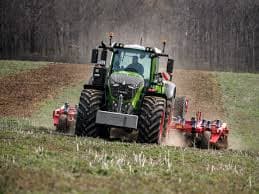
The German federal states have reluctantly agreed to a stricter manure law in order to avoid a European multi-million euro fine. This means more areas are classified as 'nitrate-polluted' and manure may be spread on fewer pastures.
The federal states must also implement a much more detailed network of monitoring stations within a year.
The new administrative regulation entails that the “red areas” nearly double to 2.9 million hectares of agricultural land. German Agriculture Minister Cem Özdemir and Environment Minister Steffi Lemke (Greens) reached an agreement with the European Commission on this. Brussels had initiated and won procedures against Berlin for not acting against excessive nitrate pollution levels in German groundwater.
Promotion
The European Commissioners for Climate, Environment, Health, and Agriculture made it clear to Germany that ignoring, evading, and circumventing EU rules would no longer be tolerated. Brussels threatened to impose multi-million euro fines if the German federal states continued to resist the new rules. German water supply companies welcome the new regulations against nitrate contamination.
In the Netherlands, too, poor compliance with the EU Nitrate Directive is under scrutiny. For years, the Netherlands was allowed to spread more natural manure, but Brussels now intends to put an end to this. Prime Minister Rutte said last Friday after the cabinet meeting that he expects the Netherlands to lose these derogation rights. “The Netherlands must really get to work as well. We cannot expect to be treated differently from other countries,” the prime minister said.
Agriculture Minister Henk Staghouwer and the Ministry of Agriculture, Nature and Food Quality have in recent months been trying behind the scenes in Brussels to still obtain derogation, or another multi-year solution. So far, the EU Nitrate Committee has rejected ideas submitted by the Netherlands if they are not binding or legally enforceable in some way.
Agriculture Commissioner Janusz Wojciechowski recently reiterated to reporters that he believes the Netherlands has too many livestock for its limited space. He said the Netherlands could reduce its livestock numbers with EU subsidies aimed at improving animal welfare: fewer cows means larger barns, means more living space, means better animal welfare…