

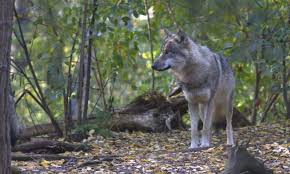
European Environment Commissioner Virginius Sinkevicius believes that wolves and agriculture must coexist. He does not think that wolf hunting should be reopened. According to Sinkevicius, the focus should be on protecting grazing livestock by installing fences and building night shelters and barns.
Attacks by wolves on sheep, goats, and cattle have steadily increased across Europe for decades. Currently, more than 17,000 wolves are registered throughout Europe. Sinkevicius emphasized on Monday in Brussels that the EU Habitats Directive does not need to be changed to keep the wolf population under control.
EU countries already have the option to authorize the shooting of problem wolves as an exception. Some EU member states have already made use of the exemption in the EU Habitats Directive. Under this EU version of the Bern Convention (‘red list’), the wolf is classified as one of the most protected animals.
Promotion
Austria advocated revising the outdated protection directive for the first time in 30 years and received support from 16 EU member states during the Agriculture Council last Monday in Brussels. They also called for uniform monitoring of wolves throughout Europe; currently, each country still does this individually.
The mountainous and forested EU countries asked the European Commission to classify the wolf in a lower protection category, like non-EU country Switzerland. Environment Commissioner Sinkevicius pointed out that the EU cannot amend the Bern Convention but can revise its own implementation rules. According to him, those rules already allow for the shooting of problem wolves.
However, the sixteen EU countries do not want permission to kill ‘a single wolf afterwards,’ but want to be able to manage the size of wolf packs in advance through hunting permits.
They also requested more financial support for the existing damage compensation scheme, which currently only provides standard reimbursements. There is also limited subsidy available for the installation of fences and enclosures, but not for permanent surveillance. The future Common Agricultural Policy (CAP) supports such concerns and finances 100 percent of investments, according to Brussels.