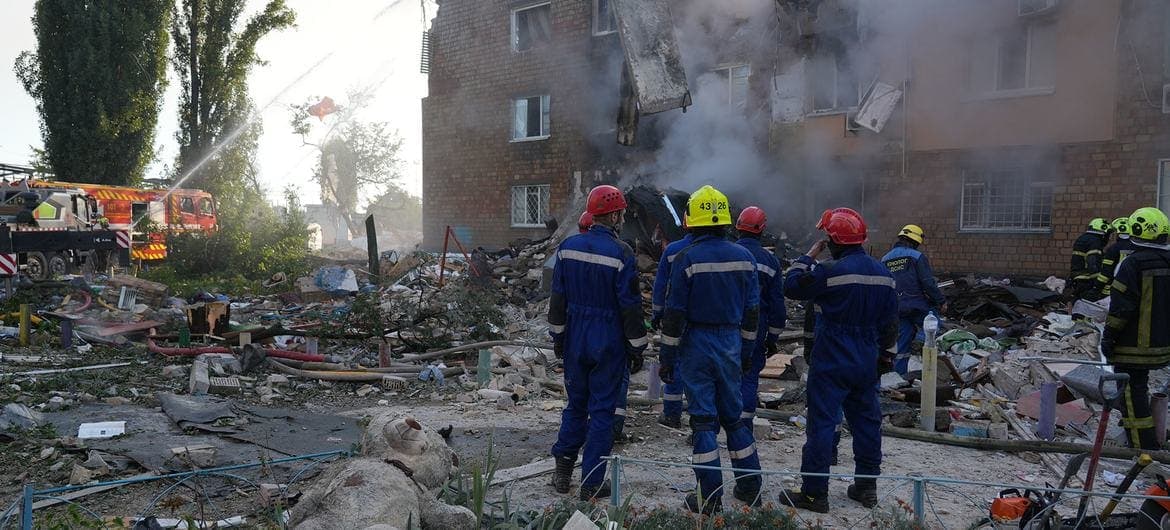
The ministers are meeting following a new severe Russian missile attack on Kyiv and other Ukrainian cities, which also caused considerable damage to the EU office. While most countries sharply condemned the attack, Hungary refuses to support the joint statement by EU foreign policy chief Kaja Kallas.
Alongside the condemnation of the Russian attack, the focus is on expanding sanctions. The nineteenth package against Moscow is in preparation, centering on the seizure of Russian bank assets. These assets, worth hundreds of millions, should, according to several member states, be used for reconstruction and military aid to Ukraine.
Hungary is strongly opposing this plan and has even taken the issue to the European Court of Justice. According to the Hungarian government, using the frozen assets is illegal and violates European agreements. The case has been formally filed, allowing Budapest to bypass unanimous decision-making within the EU.
The European Commission states that the money from the Russian bank assets can be lawfully used. It involves interest income from the frozen funds, which should serve as additional support for Ukraine. Supporters emphasize that this is a way to make Russia contribute to the damage it caused.
For the first time, not only the interest but also the actual funds are intended to be paid out to Kyiv.
Meanwhile, Commissioner Kaja Kallas announced that the EU will continue and increase its support to Ukraine on all fronts, including military, humanitarian, and financial aid. This message is meant to underscore that European policy is not weakened by the Hungarian opposition, although that does cause delays.
Hungary's opposition is not limited to this dossier. Budapest has repeatedly voiced opposition to accession negotiations with Ukraine. These talks are entering a new phase next week.
The discussion is being closely followed in Ukraine. President Volodymyr Zelensky spoke last week with Commission President Ursula von der Leyen about the nineteenth sanction package, emphasizing the importance of swift decision-making. Much is at stake for Ukraine as Russian attacks continue unabated and the need for international support remains great.
In addition to Russia, Israel is also on the agenda. Several EU countries are considering withdrawing favorable trade terms for Israel. Here too, Hungary is obstructing efforts. The lack of joint EU sanctions against Israel led last week in the Netherlands to the resignation of the recently appointed Minister Veldkamp.
Several EU countries, such as Spain and Ireland, have already imposed their own national sanctions against Israel because of the war against Palestinians in the Gaza Strip, but other member states have so far preferred to act only jointly as an EU bloc.