

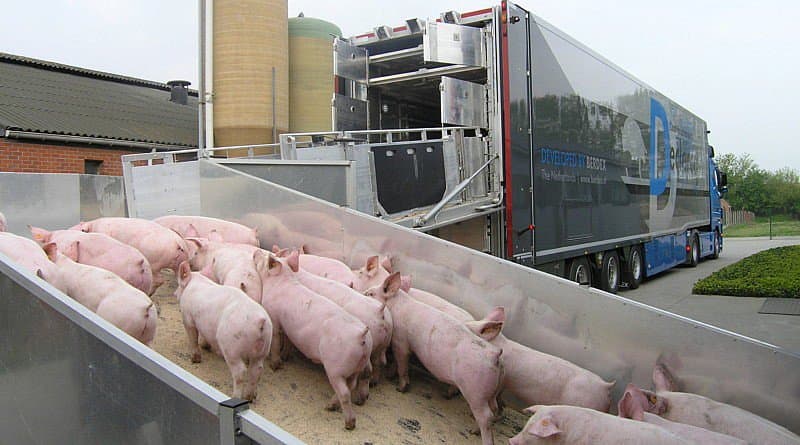
Most EU countries reject a proposal from the Netherlands, Germany, and Luxembourg to ban long-distance animal transports. The focus is mainly on livestock transports to Morocco, Turkey, Russia, the Middle East, and Asia, but many countries in Southern and Eastern Europe are not in favor of such a ban.
However, the agriculture ministers agreed at their two-day meeting in Luxembourg that EU countries must improve animal welfare during long transports, for example through more and stricter inspections.
The three countries wanted a ban included in the new transport regulation, which is expected to come into effect in 2023. Both long-distance transports to countries outside the EU by land and by sea are a concern for agriculture ministers Julia Klöckner (Germany), Carola Schouten (Netherlands), and Romain Schneider (Luxembourg).
Promotion
Schouten previously told the Dutch House of Representatives that an exception should be made for short sea transports across the Channel to and from the United Kingdom, as the same animal welfare rules apply there as in the EU. Longer transports from Ireland to ports in France and Spain could already be more problematic.
Instead of transporting live animals, the three initiating countries advocate focusing on trade in meat, carcasses, and genetic material. According to German minister Julia Klöckner, animal welfare should not stop at the EU’s borders. With transports to more distant countries, the minister said there is no certainty that animal welfare standards are met.
A ban on sea transports would mean the EU follows New Zealand’s example, which recently imposed a sea export ban. Animal rights activists and veterinarians have criticized these transports for years.
A recent study showed that most of the livestock transport ships approved by the EU fall into the category of high-risk vessels and are not suitable for transporting live animals.