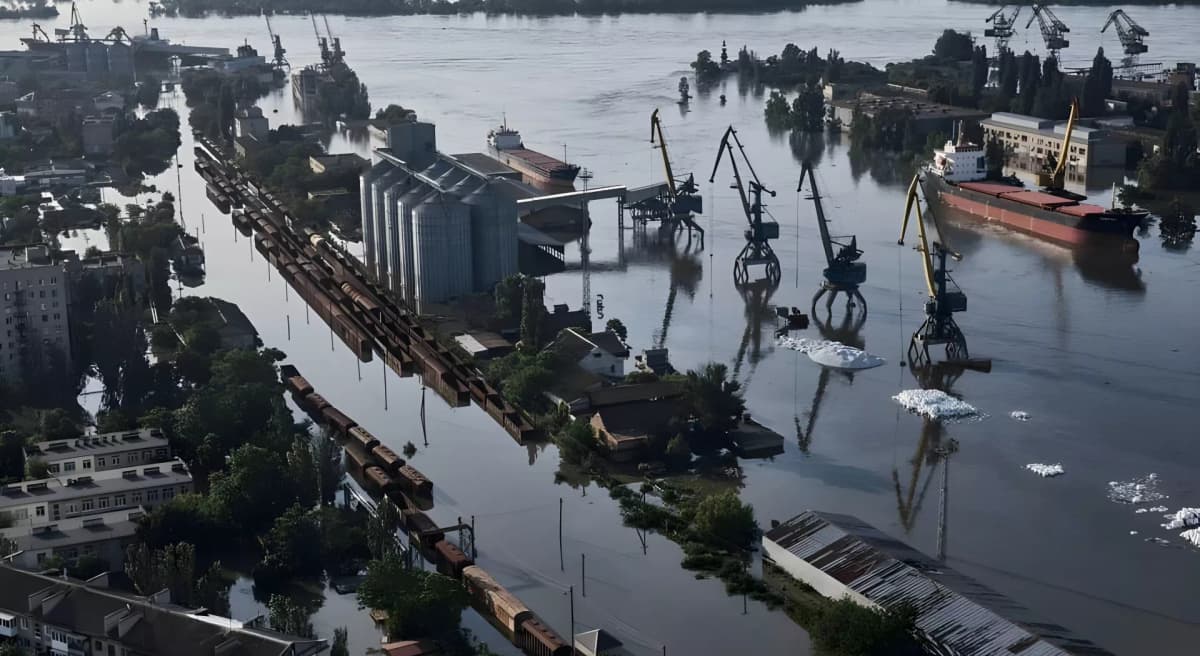
Agricultural areas in the southeast of the country sourced almost all their irrigation water from the now-drained reservoir. That entire irrigation system has disappeared. It can only be restored if a new dam can be built, which may take years. In addition, the industrial region around the city of Kherson is partly inaccessible due to the flooding, and there is extensive damage to industries.
In the European Parliament, the blowing up of the dam has been sharply condemned. PvdA MEP Thijs Reuten called it "a Russian war crime on top of a war crime on top of a war crime." Others describe the Russian aggression as a new threat to food security.
Ukrainian agricultural exports are threatened not only by the Russian blockade of the Black Sea but there are fears that many Ukrainian harvests will significantly underperform in the coming years.
Furthermore, it appears that large tracts of farmland have been “poisoned” by chemicals, waste residues, and other materials carried away by the floodwaters. Along several hundred kilometers of riverbanks, entire villages, factories, ammunition depots, and other materials have been washed away southwards into the Black Sea.
This new “crisis-for-an-entire-generation” was not yet included in the resolution on long-term food security submitted this week in the European Parliament because the text had already been finalized by the agriculture committee earlier.
The resolution was a response to an earlier European Commission report (December 2022), which examined the (then known) consequences of the Russian war against Ukraine and the disruption of grain and food exports.
At the time, EU Commissioners concluded there were no food shortages in Europe and only short-term transport and export difficulties. Agricultural politicians did not agree with this reassuring approach by the European Commission. At their urging, two temporary measures to expand food production were already included in the new multiannual EU agricultural policy (CAP).
The resolution from the agricultural lobby largely reiterates familiar positions on the importance of European agriculture. More specifically, it again calls for deeper research into all possible income impacts on farmers from the Green Deal. It also again requests more restrictions on competing imports from non-EU countries.