

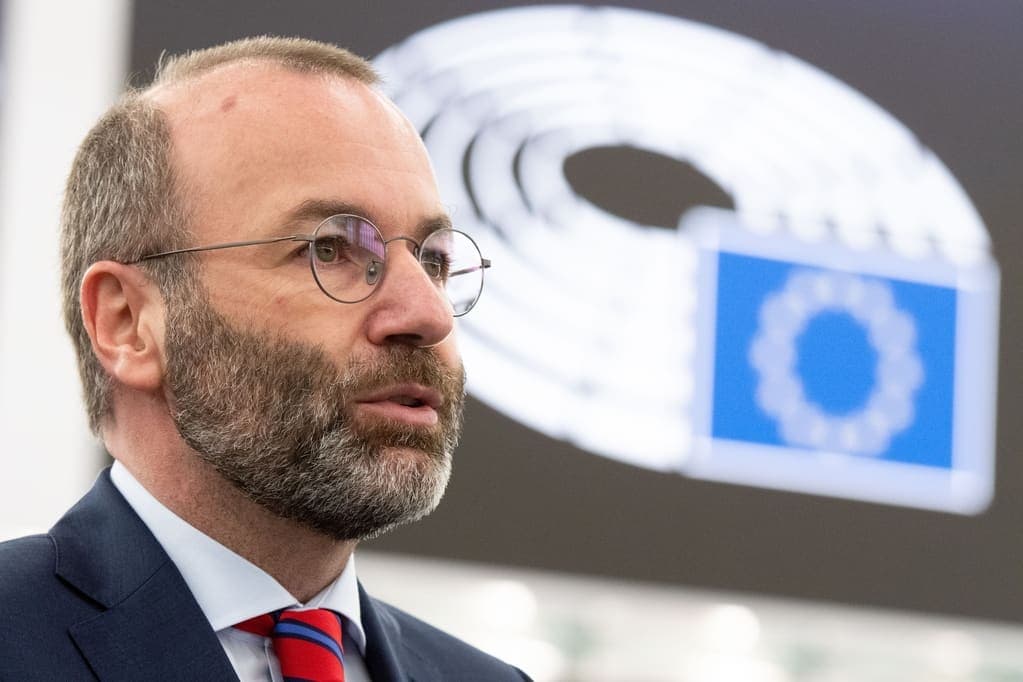
A power struggle has erupted at the top of the European Parliament over the presidency of the parliament. It remains unclear whether the current president, the Italian social democrat David Sassoli, refuses to step down, or whether the German Christian Democratic group leader Manfred Weber declines to succeed him mid-term.
During the election of the European top positions in 2019, an agreement was made between the major political groups that the S&D social democrats would provide a president for the first half of the five-year term, and the EPP Christian Democrats for the second half.
Under that agreement, Sassoli would serve the first half, and everyone expected Weber to replace him mid-term. That transition was supposed to take place this autumn (November).
Promotion
At the EPP’s executive meeting on Wednesday and Thursday in Berlin, Weber announced that he wants to continue leading Christian Democratic party politics in Europe. Therefore, Weber – according to his own statements – not only wants to remain group leader in the European Parliament in Strasbourg but also aims to become the chairman of the overarching EPP party executive. In this role, he intends to succeed the pro-European Pole Donald Tusk, who next year will run in the upcoming parliamentary elections in Poland.
Weber’s stepping aside opens the race within the EPP group for an alternative candidate. The Christian Democrats must now consider other options, with names such as the Spaniard Esteban González Pons, the Dutch Esther de Lange, or the Maltese Roberta Metsola already being mentioned. Many Members of the European Parliament would welcome a female politician as president of the European Parliament.
Other groups in the European Parliament have reacted indignantly to the announcement that the EPP has initiated the procedure to elect a new president of the European Parliament. Some MEPs accuse the EPP of ‘power lust’ by more or less ‘claiming’ that seat, while they still need votes from other politicians to succeed.
Furthermore, the move is called a slight against the S&D for not waiting patiently until Sassoli officially announces that he will indeed – as previously agreed – step down mid-term. Among the social democrats, there are also suggestions that Weber wants to keep his options open for a possible ministerial position in Germany.
In polls ahead of the federal elections later this month, the German CDU/CSU is not faring well, and it is unclear whether the traditional German ruling party will be part of a new coalition government. Given the division among German voters, a three-party coalition will be needed for a majority in the Bundestag, and numerically, five parties are contenders for this.