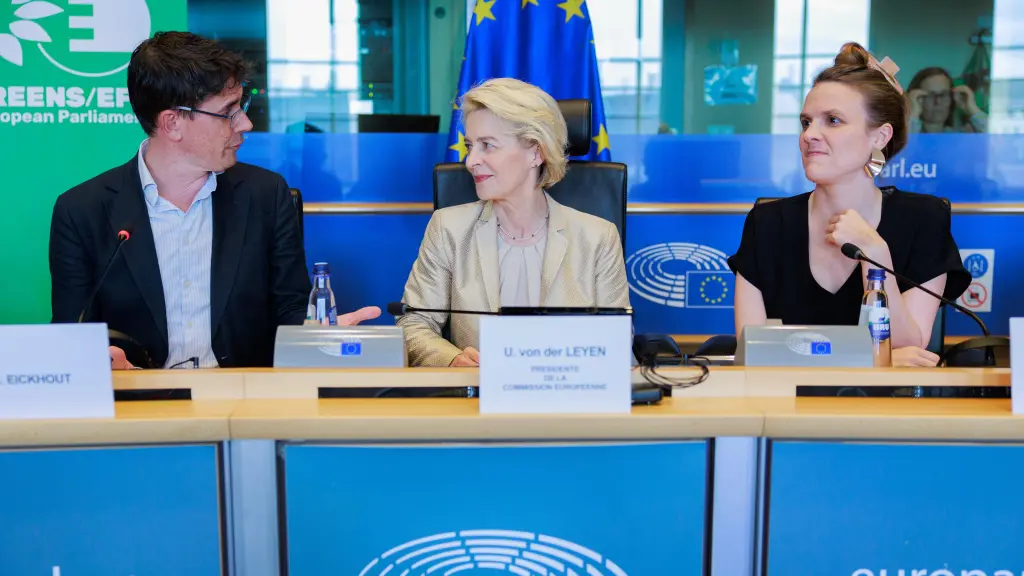
According to the European Commission, Europe must become stronger and more self-reliant in a world that is becoming increasingly unpredictable. This means less dependence on other countries for energy, technology, and raw materials. Brussels wants the European economy to be better able to withstand external shocks.
The course announced by Commission President Ursula von der Leyen in her latest State of the Union in September is now taking shape. Whereas the emphasis previously lay on rules and supervision, the focus is now on growth, innovation, and cooperation. Brussels wants to build rather than dismantle, Commission President Von der Leyen said during the presentation of her Work Plan 2026.
The work program reflects the new reality in which the EU must operate. The Russian war against Ukraine is forcing EU countries to invest in energy security and defense. At the same time, the Union wants to arm itself against the trade conflicts that began under US President Trump.
The 2026 plans place economic resilience and innovation at the center. The Commission is working on new laws for biotechnology, the circular economy, and cheaper energy. In addition, old rules are being revised to make the internal market simpler and fairer.
EU countries and the European Parliament have agreed to tackle unnecessary government control. Brussels wants to repeal laws and regulations that no longer work and wants to simplify existing rules. “Fewer but better rules” is the principle.
Dutch MEP Bas Eickhout (GroenLinks-PvdA) responded positively to the new tone. The co-chair of the Greens sees concrete steps in combining industry, climate policy, and social security. However, he stresses that the plans must actually be turned into legislation and not remain intentions.
Animal welfare organizations, on the other hand, respond with disappointment. The work program lacks any new legislative proposals to address abuses in livestock farming or animal transport. Only a non-binding strategy on livestock farming is planned for next year.
The reform of the animal transport law, intended to shorten the travel time of slaughter animals, is also at a standstill. Negotiations between the EU countries and the European Parliament are stalled. For the time being, there appears to be no progress, much to the frustration of organizations that have long called for stricter rules.