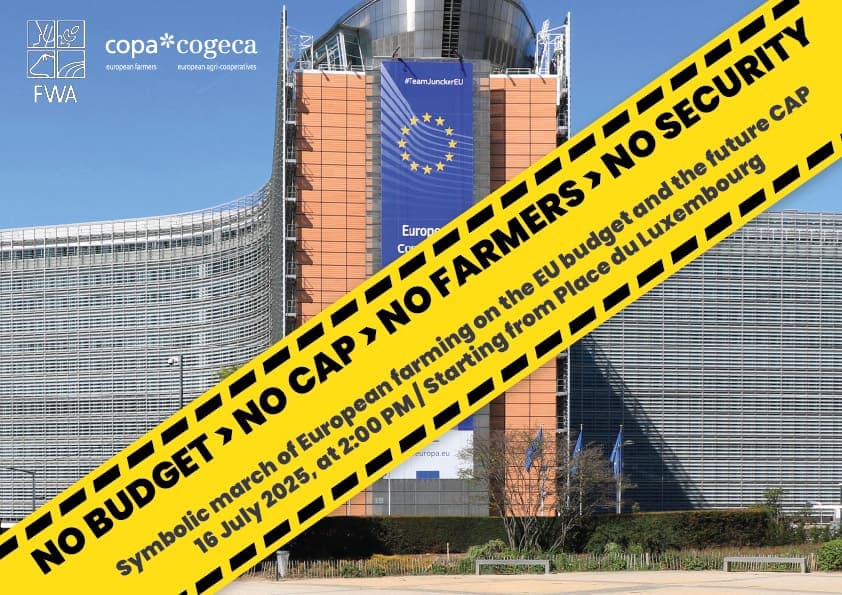
The European Commission has been working in recent weeks on a major reshuffling of the multiannual budget that will apply until 2035. To keep the budget manageable, large cuts and reallocations are being prepared.
In this context, the Commission is exploring whether existing funds can be merged. However, a proposal in this direction met strong opposition from both the European Parliament and national capitals. The European Commission therefore seems to be preparing a revised plan.
Earlier internal proposals considered decoupling the rural development fund from the agricultural budget. That money would then be combined with cohesion funds into national envelopes, which EU countries would largely manage themselves. Such a far-reaching decentralization would significantly reduce European influence over certain policy areas.
Particularly, the so-called hectare subsidy to (large) agricultural businesses has been under fire for years because EU farm money primarily goes to large corporations and cooperatives, rather than real farmers. Meanwhile, more attention is being given within EU agriculture to support for innovation and renewal, and for young, starting farmers.
Resistance to major changes in agricultural funding is especially growing in the European Parliament. The Christian-democratic EPP group wants to maintain the current agricultural subsidy structure. The social-democratic S&D group opposes cutting the European Social Fund, which is used for employment and social inclusion.
Farmers’ organizations in Europe have announced they will hold protests in Brussels on Wednesday, coinciding with the presentation of the multiannual budget. They fear agriculture will serve as the balancing item to fill budget gaps.
The pressure on the European Commission is therefore increasing. According to unconfirmed reports, Brussels now considers maintaining agricultural and social policy subsidies as separate funding streams, but agriculture would still have to make substantial cuts.
On Monday, the 27 EU agriculture ministers will meet in Brussels. During this meeting, European Commissioner Christoph Hansen is scheduled to explain his vision for the future of European agricultural policy. At least, that was the plan so far.
Hansen wants to have his proposal for the new agricultural policy for 2028-2035 adopted later this year, but that closely depends on the outcome of negotiations about the long-term financial framework.