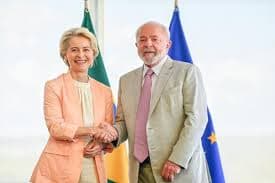
Objections, especially from agricultural countries, will be handled within existing EU procedures, so a formal amendment of the text is no longer necessary, says the Commission.
The decision to put the agreement to a vote in its current form reduces the chance that a majority of EU countries can still block its conclusion. Brussels has also abandoned the option of approving the treaty in separate parts. A split procedure would increase the risk that one part is approved but another is not, causing the entire package to stall.
The Mercosur agreement is one of the largest trade deals the EU has ever concluded. It provides for the abolition of a significant part of import duties, thus creating a common market with hundreds of millions of consumers. The European Commission aims to finalize the treaty this year as part of a broader revision of trade strategy.
For farmers' organizations and agricultural unions in several EU countries, this prospect is cause for renewed mobilization. In France, unions have announced they will again take to the streets and block roads to pressure the government. Protests are also being prepared in Italy and Poland, where farmers threaten mass demonstrations in capitals and near government buildings to prevent approval.
The European Commission emphasizes the opportunities the agreement offers. It would strengthen the position of European companies worldwide and provide access to a market where demand for industrial goods and services is strongly increasing. Combined with new negotiations with Asian and African countries, Brussels sees the Mercosur treaty as an essential building block for greater economic clout.
Expectations in agriculture are clearly different. Farmers fear that an influx of cheaper South American beef, poultry, and sugar will undermine the competitive position of European producers. There are also concerns about differences in environmental and production standards, which could unfairly disadvantage European farmers. Supporters of the treaty deny this and point to existing protective mechanisms.
The international context plays an important role in Brussels' haste. The recent increase in import tariffs by the United States on European products has heightened pressure to secure new trade advantages elsewhere. The Mercosur agreement is therefore seen not only as an economic opportunity but also as a response to changing geopolitical relations.
Moreover, President Von der Leyen wants to finalize the treaty during the current Brazilian Mercosur presidency.
The procedure now initiated first leads to discussions by the ministers of the 27 member states. This is followed by a vote in the European Parliament. Thus, the final decision rests with the political institutions themselves. It is expected that if the procedure proceeds without new blockages, the formal completion of the process can take place later this year.
Update: the European Commission has also decided to update and expand the existing trade agreement with Mexico. This will be submitted simultaneously for approval to the EU countries and the EP.