

The European Court of Auditors believes that the European Commission should more actively detect abuse and fraud involving EU agricultural subsidies. Brussels must also encourage EU countries more to prosecute and punish fraud. The budget control committee of the European Parliament has now decided to conduct its own investigation.
It is not so much the direct hectare subsidies that are prone to fraud, but especially the incentive premiums in the rural development fund. Expenditures subject to more complex rules and some CAP payment schemes aimed at specific categories of beneficiaries have proven susceptible to fraud.
Fraudulent practices have also been identified, such as document forgery, coercion, use of political influence or insider information, manipulation of procedures, or payment of bribes. Research by the EU’s anti-fraud office (OLAF) has shown that the agricultural areas most vulnerable to fraud are publicly owned land or private land with unclear ownership.
Promotion
Fraudsters can also try to acquire agricultural land solely to receive direct payments without actually carrying out agricultural activities. The risk is higher for certain pasturelands and mountainous areas, where it is more difficult to verify whether the required agricultural activity, such as grazing, is actually taking place.
The Court of Auditors checked 698 CAP payments and found errors in 101 cases. In 17 of those cases, investigators suspected intent and fraud. The ECA has no mandate to investigate fraud but must refer cases to OLAF or the European Public Prosecutor’s Office (EPPO) for further investigation.
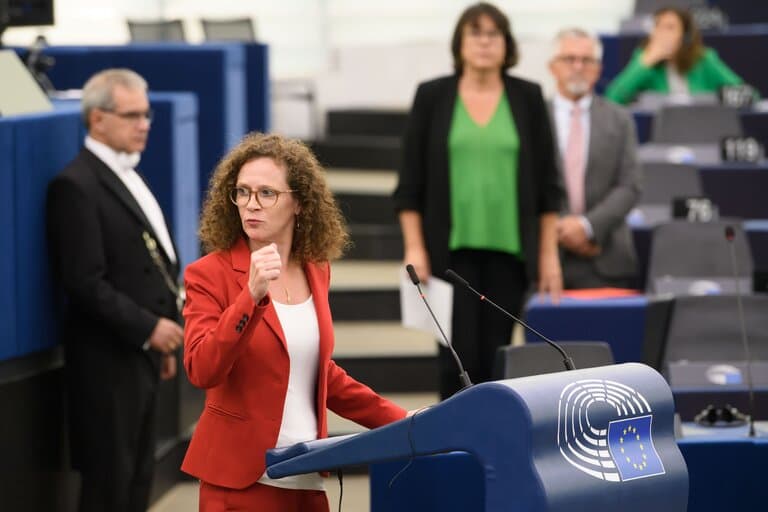
The European Parliament’s budget control committee is taking the shortcomings seriously and will conduct its own investigation. D66 MEP Sophie in ’t Veld will serve as shadow rapporteur on behalf of Renew Europe.
“Agricultural subsidies are still the largest component of the European budget. Combating abuse of this multi-billion fund requires relentless effort. It is quite concerning to read that the European Commission has not updated its approach since 2016.”